All official European Union website addresses are in the europa.eu domain.
See all EU institutions and bodies
An official website of the European Union | How do you know?
Environmental information systems
EN


Every day we are all confronted with an unprecedented volume of information. News, opinions, images, videos and increasingly AI-generated content compete for attention across digital platforms. New technologies and platforms offer extraordinary opportunities for participation, learning and engagement, but they also create risks. Misinformation and disinformation (i.e. when it is intentional) can distort public debate, undermine trust and weaken the foundations of democratic decision-making.
A changing information landscape
Disinformation and misinformation were at the heart of recent discussions with Eionet, our network of 40 countries. Our National Focal Points and Eionet Communication Group members reflected on the growing impact of environmental and climate disinformation and what we can do together. Participants highlighted a reality that many of us have observed: misleading narratives often intensify during periods of political importance, amplifying mistrust in institutions and making evidence-based debate more difficult. Official statistics and scientific findings can be misunderstood, selectively used or intentionally distorted.
Environmental and climate issues remain among Europeans’ greatest concerns. At the same time, debate about them is becoming increasingly polarised and subject to disinformation campaigns. In this environment, trustworthy institutions have a particular responsibility to provide clarity, transparency and evidence.

EEA Executive Director
Strength of the EEA and Eionet
For the European Environment Agency, creating and disseminating trustworthy information are cornerstones of our mandate.
Environmental and climate policies often involve difficult decisions, competing interests, trade-offs, and long-term considerations. Whether addressing climate change, biodiversity loss, pollution or resource use, effective policymaking requires first a shared understanding of the facts. Without that common foundation, trust erodes and public debate becomes more vulnerable to manipulation.
For more than three decades, the EEA and Eionet have worked together to provide exactly that foundation. Across 40 countries, thousands of experts contribute data, assessments and knowledge that help decision makers, different stakeholders and citizens understand the state of its environment and progress towards sustainability.
Our strength lies not only in scientific excellence but also in transparency. We explain our methods, document our sources and subject our work to rigorous quality assurance. This commitment enables policymakers, researchers, businesses, journalists and citizens alike to trust the information we provide.
Artificial intelligence: Opportunity and risk
Trust is becoming increasingly important as artificial intelligence transforms the information landscape. On the one hand, AI offers enormous opportunities. It can help analyse vast data sets, identify trends, improve access to knowledge and support innovation across society.
At the same time, AI can be used to generate highly convincing false content at an unprecedented scale. Synthetic images, fake videos, audio recordings and text can spread rapidly online, making it harder for people to distinguish fact from fiction.
Recent discussions at European level have highlighted both the opportunities and risks associated with frontier AI systems. In her latest State of the European Union address, European Commission President Ursula von der Leyen described artificial intelligence as one of the defining turning points of our time and emphasised the need to combine technological innovation with strong safeguards, transparency and public trust. She underlined that Europe must shape AI development in a way that serves society while addressing emerging risks.
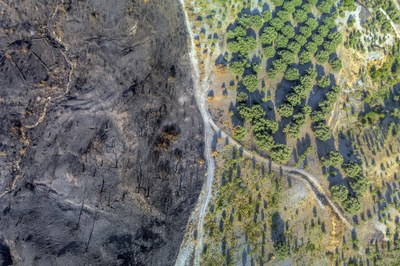
Despite the backdrop of this ‘summer of truth’ marked by intense wildfires and heat waves — as President von der Leyen put it, climate change, biodiversity loss, pollution and resource use are topics that increasingly attract organised disinformation campaigns and polarised online discussions. Social media platforms can accelerate the spread of misleading narratives, while algorithms may favour emotionally charged content over carefully verified evidence. In this environment, simply producing high-quality information is no longer enough. We must also ensure that reliable information reaches people where they are, in formats they understand, can use and trust.
Bringing evidence into public and policy debate
This is why communication is an integral part of the EEA's mission. Our role is not only to develop robust data and assessments but also to make them accessible, understandable and relevant to public and policy debates.
We must explain science clearly, engage with different audiences and help build resilience against misleading narratives. Working together with Eionet and institutional partners, journalists and civil society, we are committed to strengthening society's ability to navigate increasingly complex information environments.
Our answer to disinformation is transparency, openness, scientific integrity and critical thinking. It is ensuring that citizens have access to credible sources and understand how our data and knowledge are created.