All official European Union website addresses are in the europa.eu domain.
See all EU institutions and bodies
An official website of the European Union | How do you know?
Environmental information systems
EN

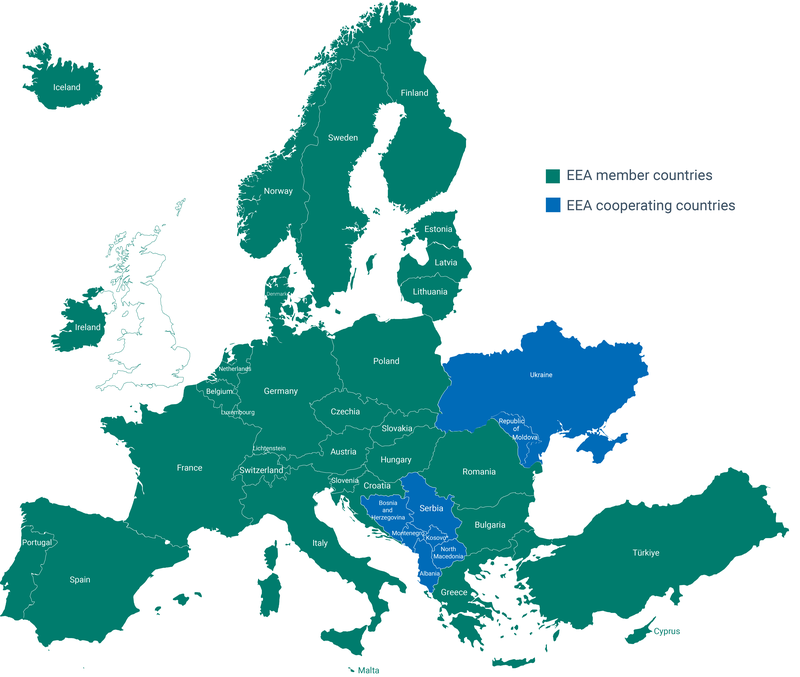
Today, I had the pleasure to welcome Ukraine into the European Environment Information and Observation Network (Eionet) as a cooperating country. With Ukraine, the EEA and Eionet now bring together expertise and experts from 40 European countries.
Ukraine joins us at a challenging moment in its history. The Russian war of aggression has inflicted devastating human suffering and caused environmental damage, the impacts of which will persist long after the fighting ends.
This is more than an institutional milestone. As Moldova and Ukraine are given the green light to start accession negotiations with the EU, our cooperation is a small but concrete contribution towards a shared European commitment to strengthen peace, security and prosperity across our continent.
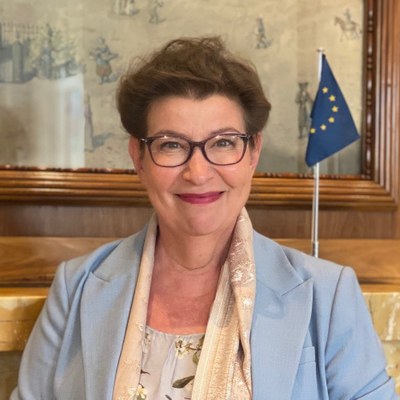
Leena Ylä-Mononen
EEA Executive Director
Knowledge matters
Few periods in recent history have witnessed such rapid and profound change as the years since 2020. The Covid-19 pandemic reshaped societies and economies almost overnight, revealing vulnerabilities but also extraordinary capacities for innovation and adaptation.
Conflicts continue to destabilise global energy markets and food production, disrupting supply chains and influencing the prices households and businesses pay every day. Climate change intensifies heat waves, droughts, floods and extreme weather events, adding further strain to natural systems and economic stability.
At the same time, artificial intelligence and digitalisation offer extraordinary opportunities as well as new uncertainties. AI has the potential to transform labour markets, public debate, the media landscape and economic sectors in ways we are only beginning to understand. As with every major technological shift, the benefits will depend on how we steer its development and use.
Across the world, we are witnessing the growing influence of disinformation and misinformation. False narratives undermine trust in science, distort public debate and weaken our ability to respond effectively to shared challenges. They erode confidence in democratic institutions precisely when citizens need trustworthy information most.
In such times, reliable knowledge becomes even more important. Facts matter. Science matters. Independent institutions matter.
This is why the work of the EEA and Eionet is so important. By providing transparent, independent and evidence-based assessments, we help create a shared foundation of facts upon which democratic societies can make informed choices about their future.
Informed public debate also helps to ensure that the benefits of a healthier natural environment, a more circular economy and climate neutrality are enjoyed by all, while providing support to the most vulnerable in our societies.
Vision for a better future
Today, as we welcome Ukraine as a cooperating country to our network, we also reaffirm a broader vision for Europe: a continent that chooses peace over war, cooperation over division, fact-based knowledge over disinformation, democracy over autocracy, and long-term sustainability over short-term gain.
The EEA and Eionet can contribute to achieving this vision. As we learn from one another, we can develop better evidence, contribute to improving policies and solutions that benefit all citizens and leave no one behind.
The strength of Eionet has always been the people within the network. Scientists, analysts, national policymakers, data experts and practitioners all work together to transform knowledge into action. Ukraine’s participation will enrich this network with significant scientific expertise, valuable experience and a deep understanding of resilience under extraordinarily difficult circumstances.
Together, we are stronger. Together, we are better informed. Together, we can build better future for us all.
Editorial published in EEA Newsletter 02/2026
See EEA press release for additional reactions and information on Ukraine's candidate country status.