All official European Union website addresses are in the europa.eu domain.
See all EU institutions and bodies
An official website of the European Union | How do you know?
Environmental information systems
EN


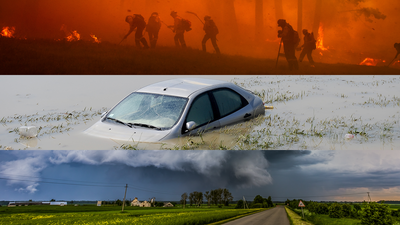
Extreme heat, drought, wildfires and storms disrupted transport, energy and water supply across Europe this year, confirming risks the European Climate Risk Assessment (EUCRA) identified two years ago. A briefing published today by the European Environment Agency (EEA) looks at how to climate-proof critical infrastructure, based on the lessons learned this year.
Extreme heat amplified by climate change cost the European Union at least 1% of its GDP in 2026, according to the EEA’s briefing ‘Europe’s critical infrastructure under climate stress — lessons from 2026’, published today. Drought, wildfires and storms also disrupted transport, energy and water supply across Europe this year, confirming risks the European Climate Risk Assessment (EUCRA) identified two years ago.
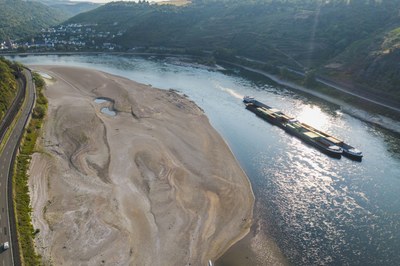
The briefing finds that the pace of adaptation needs to increase if Europe’s infrastructure is to cope with a changing climate. Low water levels on the Rhine disrupted freight transport and supply chains, storms damaged road, rail and electricity networks in Portugal, and drought and heat put power generation under pressure in Central and Eastern Europe. In many cases, the impacts spread from one sector to another. Estimates show that the energy sector accounts for about 23% of drought-related economic losses in Europe, around EUR 2 billion per year.
These events match the findings of EUCRA, published in 2024. The assessment showed that Europe’s transport, energy, communication and water infrastructure is increasingly exposed to extreme weather, and that hazards can trigger cascading impacts across interconnected systems. Water links many of these systems: EUCRA notes that prolonged drought can degrade the water resources on which ‘people, agriculture, industry, power plants, river transport and ecosystems depend’.
Lessons learned the hard way
The briefing draws six lessons from this year, as Europe strengthens its resilience to climate change:
Plan for future climate conditions: infrastructure design, appraisal and maintenance should anticipate a changing climate.
Assess risks across systems: assessments should consider networks, dependencies, supply chains and cross-border impacts, not only individual assets.
Stress-test infrastructure regularly: testing can expose vulnerabilities and help prioritise investment.
Prepare alternatives and contingency measures: backup systems, alternative routes and early warning can limit disruption.
Strengthen coordination: infrastructure owners, regulators, public authorities and emergency services need clearer responsibilities and better information about dependencies between systems.
Combine near-term and longer-term adaptation: maintenance and targeted retrofits can address immediate vulnerabilities, alongside more far-reaching adaptation where needed.
The briefing's findings arrive as the European Commission presented the EU Framework for Climate Resilience, which sets out a more systematic and anticipatory approach to managing climate risks across the EU.