All official European Union website addresses are in the europa.eu domain.
See all EU institutions and bodies- БългарскиBG
- češtinaCS
- HrvatskiHR
- danskDA
- NederlandsNL
- ελληνικάEL
- EnglishEN
- eestiET
- SuomiFI
- FrançaisFR
- DeutschDE
- magyarHU
- ÍslenskaIS
- italianoIT
- LatviešuLV
- lietuviųLT
- MaltiMT
- NorskNO
- polskiPL
- PortuguêsPT
- RomânăRO
- slovenčinaSK
- SlovenščinaSL
- EspañolES
- SvenskaSV
- TürkçeTR
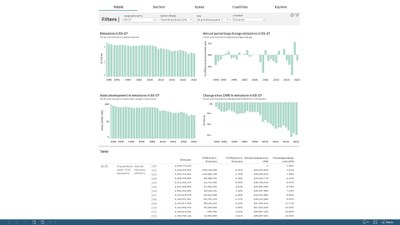
Historical combined GVA of energy-intensive industries, GHG and air emissions trends in energy-intensive industries (indexed 2005=1) 2005-2023
Chart (interactive)
The graphs show indexed trends for greenhouse gas emissions (GHG, CO2e) and 4 pollutants for 6 energy intensive sectors. There is also a graph showing indexed Gross Value Added (GVA) for all these sectors, for contextualisation. This means there are 7 mini graphs (1 for each of the 6 sectors plus 1 for GVA).

The data include emissions from auto-generation of energy and process emissions. They exclude upstream emissions from energy purchased elsewhere and downstream emissions, including from transport and handling of goods (indexed 2005=1).
- [2025a] National Emission reductions Commitments (NEC) Directive emission inventory data, EEA, accessed 6 July 2025, European Environment Agency (EEA)
- [2025b] ‘EEA greenhouse gases — data viewer’, EEA, accessed 7 July 2025, European Environment Agency (EEA)
- [2025a] ‘Gross value added and income by detailed industry (NACE Rev.2), Eurostat, accessed 4 December 2025, Eurostat - European Statistics
- Austria
- Belgium
- Bulgaria
- Cyprus
- Czechia
- Denmark
- Estonia
- Finland
- France
- Germany
- Greece
- Hungary
- Ireland
- Italy
- Latvia
- Lithuania
- Luxembourg
- Malta
- Netherlands
- Poland
- Portugal
- Romania
- Slovakia
- Slovenia
- Spain
- Sweden
- Croatia
Additional information
Regarding the data source: [2025a] ‘Gross value added and income by detailed industry (NACE Rev.2), Eurostat
It uses "chain linked volumes (2005), million eur"
Methodology
The data include emissions from auto-generation of energy and process emissions. They exclude upstream emissions from energy purchased elsewhere and downstream emissions, including from transport and handling of goods (indexed 2005=1). The briefing includes a separate PDF (technical annex) which explain the activity categories chosen within the data sources in more detail.