All official European Union website addresses are in the europa.eu domain.
See all EU institutions and bodies
An official website of the European Union | How do you know?
Environmental information systems
EN


This briefing, the first in a series, explores how proposed EU housing and climate policies can address Europe's interconnected housing and climate crises. Future briefings will focus on specific aspects of affordable, climate-resilient and sustainable housing (e.g. renovation).
Key messages
Climate risks are growing: some 129,862 heat-related excess deaths were recorded in the EU in the 2022–2025 period, while 12% of Europeans live in potential flood-prone areas.
Housing unaffordability, which takes several forms, is widespread. Rent in the EU rose by 25% between 2010 and 2024 with limited supply among the main drivers.
Climate change and housing unaffordability can reinforce each other and often affect the same lower-income households. Climate impacts can raise the cost of keeping a home safe and liveable, while unaffordable housing can leave households in poor-quality homes with less capacity to adapt.
Inaction is costly: weather- and climate-related extremes caused around EUR 920 billion of losses in the EU between 1980 and 2025. More than EUR 270 billion of this was in the last 5 years alone, and less than 20% was insured.
The EU Framework for Climate Resilience and the proposed Affordable Housing Act offer a policy window to bring the housing and climate resilience agendas together, shaping where and how homes are built and renovated so that affordability does not come at the expense of resilience or quality.
Policy context and why this matters now
Europe faces two simultaneous and increasingly acute challenges: a housing affordability crisis and growing climate risks (Eurostat, 2025; EC et al., 2026).
Limited housing supply is among the main drivers of unaffordability (European Parliament, 2025a), although supply can be expanded through new construction as well as by renovating and repurposing existing buildings (WorldGBC Europe, 2026; Eurofound, 2023). The growing climate risks Europe is facing are not only the result of increasing climate hazards, such as increasingly common extreme temperatures, but also by the extent to which societies are prepared for them(EEA, 2024).
While these challenges are often addressed separately, this briefing shows how they are connected.
It also highlights a rare convergence of several new EU housing and climate resilience policy. The European Affordable Housing Plan (EC, 2025) was followed in September 2026 by the proposed Affordable Housing Act and accompanying Commission Recommendation (September 2026), which give national, regional and local authorities a common framework for action in areas under housing stress (EC, 2026e, 2026b). The EU Framework for Climate Resilience, including a proposal for a European Climate Resilience Law, was also presented on 27 October 2026 (EC, 2026a, 2026d). Together they offer a unique opportunity to integrate climate resilience into the next wave of housing investment and renovation decisions across Europe.
At the same time, the efforts to address the housing affordability crisis carry a risk in the other direction: pressure to boost housing supply and ease prices may lead authorities to put speed and low upfront costs before long-term resilience. The result could be new housing built in climate-exposed locations, or renovations that leave households vulnerable to future climate risks.
Without clear standards, the same pressure risks locking in poor-quality, energy-inefficient housing, which would also work against the EU’s climate mitigation goals (WorldGBC Europe, 2026).
Box 1. Definitions
Housing affordability
The European Affordable Housing Plan does not set a single definition of 'affordable housing'. It covers both rental and owner-occupied housing, and recognises that standards, tenure types and eligibility thresholds vary widely across Member States.
This briefing takes the same approach. It also recognises that unaffordability takes four forms (Eurofound, 2023; European Parliament, 2025b):
- housing exclusion, such as the risk of homelessness or young adults being unable to leave the parental home;
- housing insecurity, such as the risk of eviction or losing one’s home because it can no longer be afforded;
- problematic housing costs that leave too little for other essentials, such as difficulty paying utility bills;
- housing inadequacy, such as being unable to keep the home at an adequate temperature.
Policies that ease one form of unaffordability should not worsen another.
Measuring affordability
Where the European Affordable Housing Plan needs a quantitative benchmark, it uses Eurostat’s housing cost overburden rate. This is the share of people living in households where total housing costs exceed 40% of disposable income: 8.2% of the EU population in 2024 (Eurostat, 2026a). Housing costs here include rent or mortgage interest, utilities, structural insurance, and regular maintenance and repairs (Eurostat,2023).
The indicator has limitations. Spending more than 40% of income on housing more often leads to difficulty making ends meet for low-income households and households with children than for others (Eurofound, 2023). For this briefing, its strength is that it relates costs to income and includes utilities and maintenance. These costs are often overlooked, and climate impacts may push them up.
The proposed Affordable Housing Act uses a different measure. It identifies areas under housing stress using the price-to-income ratio, which measures the cost of getting housing in an area rather than the burden on current households (EC, 2026e).
Scope of this briefing series
The housing continuum runs from emergency shelter to open-market housing (Figure 1). This briefing series focuses on the segment from social rental to the lower end of the private market. This segment covers: (1) publicly subsidised, regulated or co-financed housing, where EU legislative and funding instruments have the most direct leverage, and (2) private housing where cost-to-income pressures are greatest.
Figure 1. The housing continuum — scope of this briefing
Please select a resource that has a preview image available.
Just resilience
Just resilience means addressing the uneven impacts of climate change. When adaptation responses are developed, people and groups who are already vulnerable should benefit fairly and should not carry a disproportionate share of the burden (‘leaving no one behind’).Fairness covers both how the benefits and burdens of adaptation are shared according to people’s needs and capacities, and how affected groups are involved in decision-making (EEA, 2025).
Just climate resilience in housing
The proposed European Climate Resilience Law (EC, 2026d) introduces the principle of just climate resilience. This briefing applies it to housing. Just climate resilience in housing means the capacity of housing stock, systems and communities to anticipate, absorb and recover from climate shocks. It also means making sure all households can access decent housing that stays safe, healthy and liveable as the climate changes, without worsening inequality.
How housing affordability and climate resilience interact
Europe's housing crisis and climate crisis can reinforce each other, and low-income households are often caught between them.
Two loops are at work. First, climate impacts can raise the cost of housing and erode the housing stock that affordability depends on. Second, unaffordable housing can increase people’s exposure to climate risks and reduce their ability to adapt.
All four forms of unaffordability (Eurofound, 2023) described in Box 1 appear in the first loop (see Loop 1 below):
problematic housing costs rise as repair, insurance and energy bills increase;
housing inadequacy grows as hotter summers make more homes hard to keep at an adequate temperature;
housing insecurity increases as damage or rising risk makes homes harder to insure, finance or keep;
housing exclusion grows after disasters and can follow when homes are damaged, become uninhabitable or can no longer be kept, putting people at risk of homelessness.
Some households cannot afford to adapt even without rent or mortgage payments: many low-income owners without a mortgage, especially in eastern and southern European countries, live in inadequate dwellings they struggle to keep at an adequate temperature (Eurofound, 2023). Figure 2 illustrates these two relationships schematically.
Figure 2. The nexus between housing affordability and just climate resilience
Please select a resource that has a preview image available.
Loop 1 — climate change raises the full cost of housing
Climate-related losses create direct and indirect costs for households, housing providers and governments.
Because housing costs include utilities, insurance, maintenance and repairs (Box 1), climate impacts can affect affordability directly when they push up these components.
Damage from floods, storms, drought-induced soil subsidence and the accelerated ageing of building materials can add to repair bills, insurance premiums and public expenditure, while heatwaves act mainly through health and energy costs in poorly performing homes. Climate change is projected, for example, to accelerate the corrosion of Europe’s reinforced-concrete building stock, raising repair costs (Dimova et al., 2024). Whether households own or rent affects how these costs reach them: owners bear repair costs and premiums directly, whereas tenants depend on landlords to adapt their homes and are exposed through rents, service charges and living conditions (EEA and Eurofound, 2026).
As no losses from weather- and climate-related extremes for 2026 are available yet, one way to describe the impact of the 2026 summer heatwaves is to compare scenarios of projected GDP with or without the most intense heatwave days. Allianz associates the 2026 summer’s peak heat exposure with an estimated EUR113bn in annual GDP losses across 30 EU and EEA member countries (Allianz, 2026). Insurance coverage is already limited: less than 20% of the EUR 920 billion of losses caused by weather- and climate-related extremes in the EU between 1980 and 2025 was privately insured (EEA, 2026a) across all asset types, as EU-wide data do not isolate residential losses.
At household level, only 17% of EU consumers hold cover for property damage caused by natural catastrophes (EIOPA, 2026), and homeowners are almost twice as likely as renters to have home insurance covering extreme weather (EEA and Eurofound, 2026). In markets where insurance prices reflect each property's risk, premiums can rise as climate risk grows, so cover may become too expensive for many households well before insurers stop offering it altogether, adding to problematic housing costs. In solidarity-based national schemes with public backing, such as those in France and Spain, a flat-rate surcharge spreads costs across all policyholders, shielding high-risk households from price increases, but offering little incentive to adapt (ECB and EIOPA, 2024). Either way, uninsured losses fall on households, businesses and public budgets (EEA, 2026a).
Climate impacts also harm health and raise the energy cost of a liveable home. Extreme heat is becoming a major public-health risk, particularly for people living in poorly insulated homes without adequate cooling or natural ventilation and with limited access to green space, a pattern explored further in Box 2 below.
Heat also adds an energy dimension to affordability: in summer 2022, 26% of EU households could not keep their home comfortably cool, rising to almost 35% in the lowest income group (Koukoufikis et al., 2026). As summers become hotter, homes once considered adequate may no longer be so, and households face a growing trade-off between thermal comfort and energy bills — a form of summer energy poverty (European Parliament, 2026). Households that pay to keep cool face problematic housing costs; those that cannot are left in inadequate housing. Because energy is a means to comfort rather than an end in itself, reducing cooling needs through shading, insulation and passive design offers more durable resilience than subsidising energy use (Eurofound, 2022).
Climate risk also affects the housing stock itself. Properties in high-risk areas may become uninsurable, unmortgageable or uninhabitable within the lifetime of today’s investments (OECD, 2025), putting households at risk of losing their homes, and resilience may be costlier to add later than to build in now. Housing built or renovated without climate resilience by design could reduce, not expand, the stock of liveable affordable homes.
Loop 2 — housing unaffordability increases climate vulnerability
The relationship also works in reverse. When affordable housing is unavailable, low-income households can be pushed into lower-quality or more exposed homes.
In some European cities, socially vulnerable households are concentrated in hotter neighbourhoods. In Padua, for example, heat-intensity hotspots overlap with concentrations of low-income residents (Pappalardo et al., 2023). Across the cities analysed by the European Climate and Health Observatory, however, people not in employment are only slightly overrepresented in urban heat island areas, and only in some cities, such as Brussels, Liège and Porto (EEA, 2026e). Where such concentrations do occur, housing costs are one plausible reason: lower-cost housing is often in denser, older and less green neighbourhoods. Box 2 tests this relationship in 25 European cities and shows that in 16 out of 25 analysed cities, lower-income neighbourhoods experience significantly more heat at night.
Exposure to flooding shows no consistent pattern across Europe (EEA, 2026c). In Germany, for example, flood exposure does not vary with income. However, low-income households are less likely to take out insurance or protect their homes, and flood damage costs them more relative to their income (Osberghaus, 2021).
Housing pressure is also unevenly spread. Shortages are more acute in urban, high-demand, coastal and tourist regions (Balouktsi et al., 2025). Where affordability pressure and climate exposure overlap therefore depends on local housing markets.
Poor building condition adds to vulnerability: in 2023, 15.6% of the EU population lived in a dwelling with a leaking roof, damp or rot (Eurostat, 2026b). These forms of housing inadequacy also make homes less able to withstand heavy rain, snow, windstorms and temperature extremes. Where competition for housing is fierce, tenants are in a weak position relative to private landlords, adding to housing insecurity (European Parliament, 2026). Housing affordability can therefore shape who is most exposed to climate risks and who has the greatest capacity to adapt.
Box 2. Do lower-income neighbourhoods experience more heat at night? Evidence from 25 European cities
Tropical nights (when air temperature stays above 20°C) are closely associated with heat-related mortality, as they limit the body’s recovery from daytime heat (Royé et al., 2025). In cities, the urban heat island effect can intensify this problem, as buildings and paved surfaces store heat during the day and release it slowly at night, keeping densely built neighbourhoods warmer and making night-time heat an important dimension of housing-related heat exposure.
An analysis for this briefing compared income and tropical nights across sub-municipal units (such as statistical sectors, IRIS (îlots regroupés pour l’information statistique) or census sections) in 25 cities in Austria, Belgium, Denmark, France and Spain, the only countries with such data.
Income is used as an indicator of housing unaffordability, which is concentrated among low-income households regardless of tenure (ECB, 2024). The analysis captures outdoor heat only, not indoor temperatures, housing costs or causes. Housing quality and green space are likely contributing factors but were not tested.
The analysis finds that the association between income and tropical nights is common but not universal (Figure 3).
In 16 cities, lower-income neighbourhoods experience significantly more tropical nights. In five (Bilbao, Murcia, Paris, Seville and Valencia) the relationship is reversed, and in four (Alicante, Bordeaux, Graz and Nantes) it is not significant. Exceptions also occur outside the analysis sample. In Budapest, for example, lower-income residents, including those in social or peripheral housing, are concentrated in lower-density areas with more green space than denser, wealthier inner-city districts, which reduces their exposure to tropical nights (Csomós et al., 2024).
Where lower-income neighbourhoods are hotter, this adds to other disadvantages. Cities with higher gross domestic product (GDP) per capita tend to provide more green space (Bertassello et al., 2026), and Europeans who make ends meet easily are more likely than those struggling financially to report tree planting or urban greening in their area (EEA and Eurofound, 2026).
Lower-income households are also more likely to live in older, poorly insulated housing that performs badly under heat stress (housing inadequacy) and have the least financial capacity to retrofit or adapt it (Bertassello et al., 2026; Makridou et al., 2024; Ozdemir and Koukoufikis, 2025; EEA, 2026b).
Tenants face an additional barrier: they are rarely permitted to make structural changes, landlords have little incentive to invest when rents do not reflect adaptation, and renovations can trigger rent increases and ‘renovictions’ (housing insecurity) (EEA and Eurofound, 2026).
Figure 3. Correlation between disposable income (2018) and the number of tropical nights (2011-2020) in 25 European cities
Please select a resource that has a preview image available.
Brussels shows the strongest association: the number of tropical nights falls steeply from lower- to higher-income neighbourhoods, amplified by the city’s structure and topography, with a dense, sealed centre in the Zenne valley and greener, less built-up areas on higher ground to the south and south-east (Figure 4).
Figure 4. Overlap between disposable income (2018) and the average number of tropical nights (2011-2020) in Brussels
Please select a resource that has a preview image available.
The costs of inaction
The costs of not adapting fall on different groups and at different times. These are:
- one-off damage to dwellings, borne by owners or housing providers;
- recurring household costs such as insurance, energy and health;
- public liabilities such as disaster recovery, emergency housing and health care.
Some examples include:
Europe’s insurance protection gap, meaning the share of economic losses that is not insured, exceeds 80% (EEA, 2026a). These uninsured losses fall into two groups. Some fall on households, and those who cannot afford to repair or adapt their homes are left in inadequate housing. The rest fall on public budgets, through disaster recovery, emergency housing and health system costs. The EU Solidarity Fund is already under critical fiscal strain after recent floods and wildfires (EEA, 2024). That strain will only increase as Europe continues to warm rapidly (C3S/ECMWF and WMO, 2026; EEA, 2024).
Heat already causes tens of thousands of deaths in Europe every summer. Between 2022 and 2025, 129,862 heat-related excess deaths were recorded in the EU (EEA, 2026a), and about half of the heat-related deaths in summer 2022 have been attributed to human-caused climate change (Beck et al., 2024). Heat also strains health systems. In Portugal, hospital admissions were 19% higher on heatwave days (Alho et al., 2024). In France, emergency visits for heat-related conditions doubled during the 2022 heatwaves (Santé Publique France, 2022; EEA, 2026d). In the EU, deaths from extreme heat are projected to increase tenfold with 1.5°C of warming and more than thirtyfold with 3°C (EEA, 2024).
Housing quality can determine the likelihood of survival in extreme heat. During the 2003 heatwave in France, older people living at home were more likely to die if their homes lacked thermal insulation or they slept directly under a roof (Vandentorren et al., 2006). Inadequate housing – including poor heating, poor insulation and damp – costs EU economies nearly EUR 194 billion a year in health care, social services and lost productivity. Remedying it would pay for itself within about 18 months (Eurofound, 2016). Improving housing quality and resilience is therefore a public health investment.
Climate risk can also reduce the value of housing itself (OECD, 2025), and this is already visible in European markets. In the Netherlands, homes exposed to flood risk sell at an average discount of about 1%, although collective adaptation measures substantially reduce this effect (Eichholtz et al., 2026). For owners, this adds to housing insecurity.
These costs fall differently on owner-occupiers, landlords, social housing providers and lenders. The policy question is therefore not only what adaptation costs, but who bears the costs of not adapting, and when.
Why the current policy window matters
The instruments now being designed will shape where and how housing is built and renovated for decades, and resilience criteria are easiest to embed before they are finalised.
The European Affordable Housing Plan already sets the direction: greater affordability should not come at the expense of sustainability, including resilience, or quality (EC, 2025). It links to the EU Mission on Adaptation to Climate Change as well as the New European Bauhaus (NEB), which provides principles, blueprints and practical examples for combining affordability, sustainability, quality and resilience in the built environment (EC JRC, 2026; EC, 2022).
The proposed Affordable Housing Act, a binding EU regulation entering the co-decision procedure with the European Parliament and the Council of the European Union at the time of this briefing’s publication, gives national, regional and local authorities a common framework for identifying areas ‘under housing stress’ (EC, 2026e) and responding to their needs.
The accompanying Commission Recommendation adds that plans to accelerate housing supply should be coordinated with climate resilience, with particular attention to heat and future cooling needs (EC, 2026b). Co-decision offers an opportunity to reflect climate resilience in the act’s framework, for example, in how areas under ‘housing stress’ are defined and where new supply is directed. This would embed resilience into binding rules, rather than relying only on the plan's non-binding recommendations.
The EU Framework for Climate Resilience, presented by the European Commission on 27 October 2026, reinforces this approach (EC, 2026a). Its proposed European Climate Resilience Law sets a common reference global warming trajectory (1.5°C by 2030, 2°C by 2050, 3°C by 2100) for decisions on policies, assets and investments, and encourages public authorities to apply it in budgeting, spatial planning and impact assessments (EC, 2026d). The framework also introduces the principle of just climate resilience, with targeted support for people in vulnerable situations and communities. When applied to the Affordable Housing Act and to national housing investment, this would mean new supply and renovation work would be assessed against future climate conditions, not past ones.
In addition, several complementary instruments are now operational or entering into force simultaneously. These include:
the Energy Performance of Buildings Directive (Directive (EU) 2024/1275) (European Parliament, 2024);
the Social Climate Fund (2026-2032, at least EUR 86.7 billion) (European Parliament, 2023);
EU cohesion policy;
the Council Recommendation on the New European Bauhaus, which asks Member States to embed its values, including sustainability, in policies and funding for the built environment (Council of the European Union, 2026).
European building standards are also adapting, with the second-generation Eurocodes accounting for future climate impacts on buildings (Polo López et al., 2025, 2026).
Renovation can strengthen both affordability and resilience if it is designed to protect lower-income households and tenants from cost increases and displacement (housing insecurity) (EEA, 2026e). Whether resilience investment improves or worsens affordability will depend on how it is funded or financed (through grants, loans or guarantees) and on whether its costs are passed on through rents, service charges or taxation. How these instruments can be combined to address this will be explored in the next briefing in this series.
Boxes 3 and 4 show that local authorities are already combining affordability and climate resilience using the instruments available today. Vienna uses public ownership and design standards to link heat resilience to regulated rents. Getafe has used EU cohesion funding to turn a diagnosis of energy-poverty into a city-wide rehabilitation strategy.
Both examples point to conditions that EU instruments can create: (1) long-term stewardship of housing by public or non-profit bodies, (2) targeting by need regardless of whether people own or rent, and (3) funding that combines energy, adaptation and social objectives.
The NEB Catalogue of Blueprints for Affordable and Resilient Homes collects further examples (EC JRC, 2026). It draws lessons from 21 NEB-aligned projects that tackle affordability and resilience together in specific local and climatic contexts. More are available among the wider NEB tools and resources (EC, 2026c).
Looking forward —opportunities for action
The EU institutions shaping these instruments, and the national, regional and local authorities that implement them, could explicitly consider how housing affordability and climate resilience interact when designing future legislation, funding instruments and investment programmes. This approach could include:
assessing how climate risks may affect the long-term affordability, safety and viability of housing investments;
ensuring that affordable and social housing programmes contribute to climate resilience and preparedness;
coordinating plans to accelerate housing supply with climate resilience, using future climate scenarios and with particular attention to heat and cooling needs, as the Commission recommends (EC, 2026b);
prioritising investments that reduce the vulnerability of low-income and socially vulnerable households to climate hazards, without worsening other forms of unaffordability such as housing insecurity;
avoiding new risks from housing that is located or renovated without regard to future climate conditions, for example by applying climate-proofed design standards such as the second-generation Eurocodes (Polo López et al., 2025);
using the national strategic plans on climate resilience required under the proposed European Climate Resilience Law to identify housing as a risk area and to help clarify who is responsible for managing housing-related risks, and to assess who gains and who loses from resilience measures in housing investment (EC, 2026d);
linking the forthcoming European heatwave plan, the 2027 EU action plan for energy-efficient cooling and heating and the Climate Insurance Alliance to housing affordability, so that heat protection and insurance coverage is available to low-income households, including tenants (EC, 2026a).
By recognising housing affordability and climate resilience as interconnected policy objectives rather than separate challenges, the EU can help ensure that the transition to a more climate-resilient future is both socially fair and economically sustainable.
The question is no longer whether housing affordability and climate resilience are connected, but how current and future policy and investment decisions can reflect that reality.
Box 3. Vienna, Austria — social housing as a vehicle for climate resilience
Most Viennese live in municipally owned or subsidised housing with regulated rents, so this stock is both the front line of climate exposure and the most direct way to reach vulnerable households at scale.
The 2003 heatwave caused around 180 excess deaths in Vienna, disproportionately among older residents in poorly insulated dwellings (Hutter et al., 2007), highlighting the link between thermal vulnerability, housing quality and income.
The city's response embedded climate adaptation into housing governance rather than treating it as a separate environmental portfolio. Vienna's municipal housing company, Wiener Wohnen, manages around 220,000 units housing roughly 500,000 residents at regulated, below-market rents. Because tenants cannot be priced out of improved dwellings, resilience investment and affordability protection go hand in hand.
An example is the 1950s Deutschordenstraße complex (277 apartments), where a ‘Raus aus Gas’ pilot is combining new windows and external shading to reduce overheating with façade insulation and a geothermal heat-pump system replacing gas boilers. This improves comfort and cuts energy costs while decarbonising the stock. For new subsidised housing, developer competitions make heat resilience and greening standard criteria.
Figure 5. The Deutschordenstraße project, Vienna
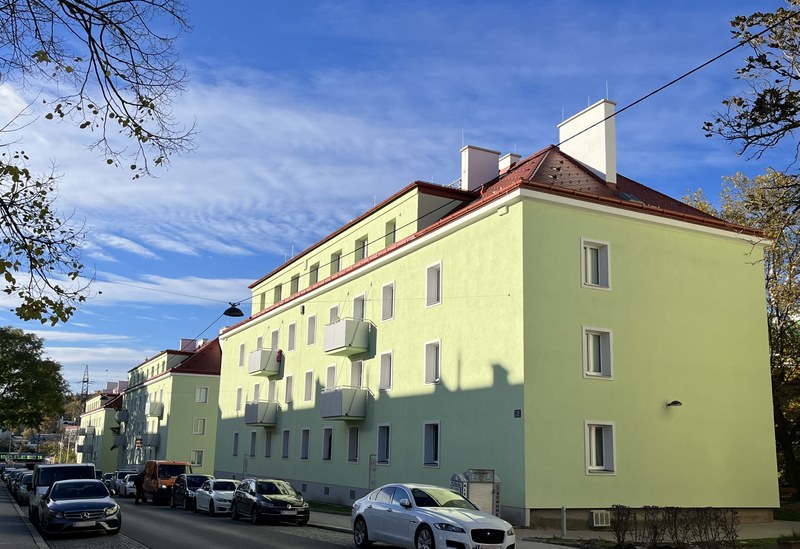
© Wiener Wohnen
What this illustrates: public or non-profit ownership that keeps rents regulated after renovation; resilience criteria built into standard procurement for new supply; and adaptation combined with energy-transition investment in the same intervention.
Box 4. Getafe, Spain — from energy poverty diagnosis to climate resilience at scale
Getafe, a city of around 200,000 residents near Madrid, recognised that its ageing, poorly insulated homes left the same households exposed on several fronts: households spending a large share of income on energy were also the least able to cope with summers reaching 41°C. Unaffordability, weak neighbourhood cohesion and heat exposure shared one physical cause.
The EU Urban Innovative Actions-funded Energy Poverty Intelligence Unit (EPIU) Hogares Saludables (Healthy Homes) project assessed individual homes to identify those at overheating risk, targeting energy-poor households regardless of tenure. Partnerships with organisations such as the Red Cross reached the most financially precarious residents. These partnerships continue through a permanent Healthy Homes Office within the municipal housing company. Measures included insulation, passive cooling and climate shelters. The project cost EUR 6.24 million (EUR 4.98 million from the European Regional Development Fund) and received an URBACT Good Practice award in 2024.
Findings were built into Getafe Rehabilita, a city-wide strategy prioritising neighbourhoods by rehabilitation need and heat vulnerability, acting at building, block and public-space scales. Building works are expected to cut energy demand by up to 50% and household bills by 20-25%. Around 20 public-space projects should lower local temperatures by 1-2°C.
Figure 6. Construction work at the Alhóndiga building
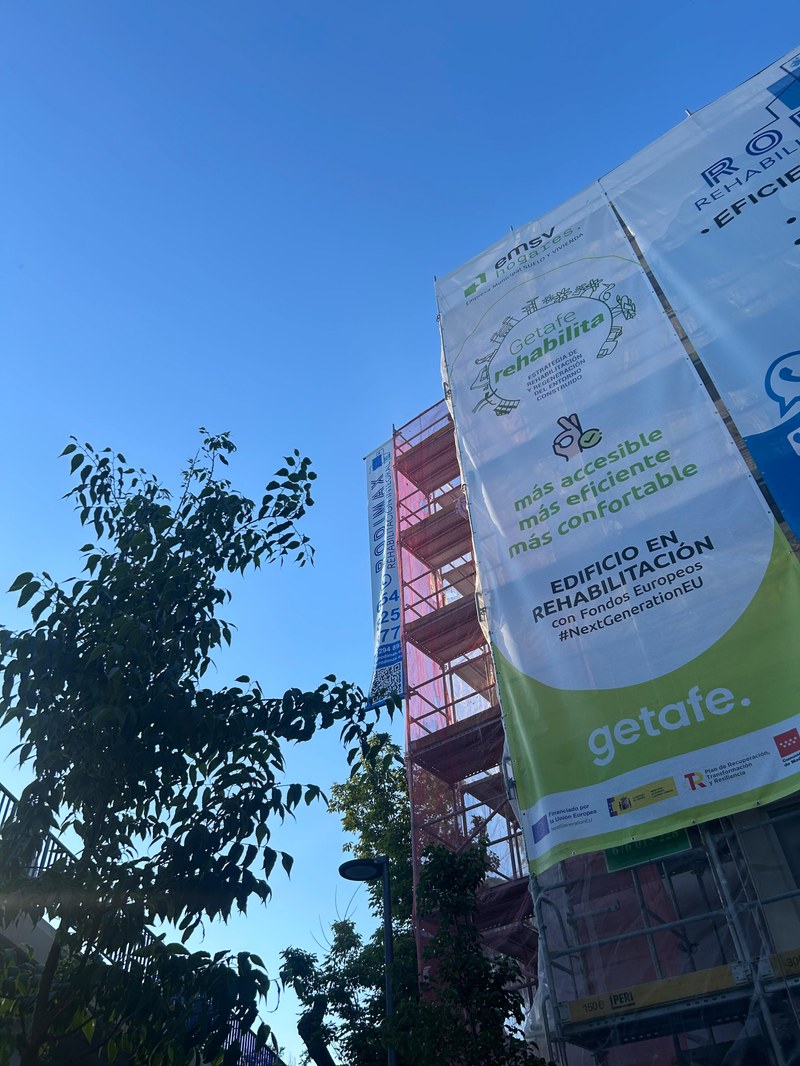
© EMSV (La Empresa Municipal del Suelo y la Vivienda de Getafe, S.A) – Getafe City Council
Figure 7. Climate refuge, Getafe, EMSV I
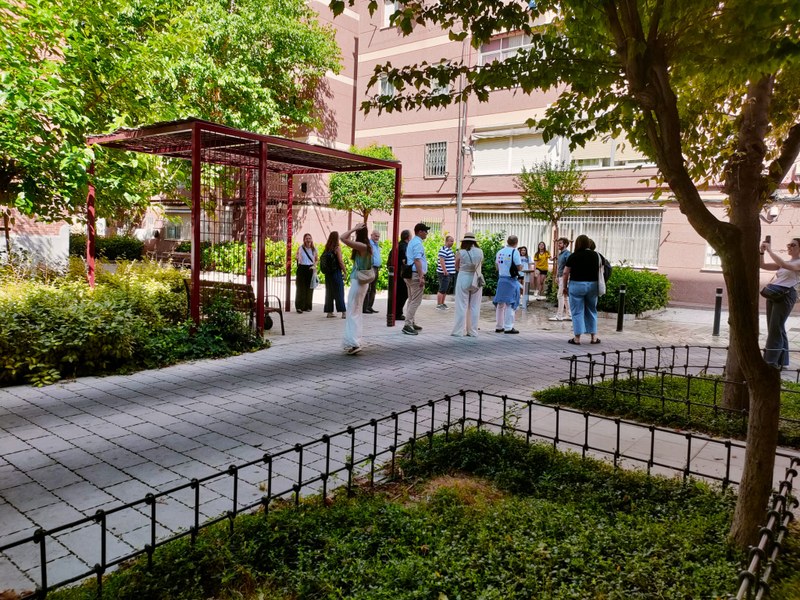
© EMSV (La Empresa Municipal del Suelo y la Vivienda de Getafe, S.A) – Getafe City Council
What this illustrates: household-level diagnosis that targets energy-poor households regardless of tenure; partnerships with social organisations to reach the most precarious residents; and turning a time-limited, EU-funded pilot into a permanent city-wide strategy.
EEA Briefing 24/2026:
Title: Towards climate-resilient affordable housing in Europe
HTML: TH-01-26-057-EN-Q - ISBN: 978-92-9480-809-7 - ISSN: 2467-3196 - doi: 10.2800/1478181
Alho, A. M., et al., 2024, ‘Effect of heatwaves on daily hospital admissions in Portugal, 2000–18: an observational study’, The Lancet Planetary Health 8(5), pp. e318-e326 (DOI: 10.1016/S2542-5196(24)00046-9).
Allianz, 2026, Allianz Climate Economics Report 2026 A year of escalating costs (https://www.allianz-trade.com/content/dam/onemarketing/aztrade/allianz-trade_com/en_gl/erd/publications/pdf/2026-09-24-climate-economic-report.pdf) accessed 12 November 2026.
Balouktsi, M., et al., 2025, Housing investment needs in the EU, European Commission JRC (https://publications.jrc.ec.europa.eu/repository/handle/JRC144703) accessed 2 November 2026.
Beck, T. M., et al., 2024, ‘Mortality burden attributed to anthropogenic warming during Europe’s 2022 record-breaking summer’, npj Climate and Atmospheric Science 7(1), p. 245 (DOI: 10.1038/s41612-024-00783-2).
Bertassello, L. E., et al., 2026, ‘Assessing European cities with the 3-30-300 rule underscores the need for enhanced urban greening efforts’, Nature Communications 17(1), p. 4846 (DOI: 10.1038/s41467-026-71523-8).
C3S/ECMWF and WMO, 2026, European State of the Climate 2025, Copernicus Climate Change Service (https://climate.copernicus.eu/esotc/2025) accessed 22 September 2026.
Council of the European Union, 2026, Council Recommendation on the New European Bauhaus (9128/2026) (https://eur-lex.europa.eu/legal-content/EN/TXT/?uri=CONSIL%3AST_9128_2026_INIT&qid=1793182908903) accessed 2 November 2026.
Csomós, G., et al., 2024, ‘A GIS-based assessment of different income groups’ access to multiple types of green areas in Budapest, Hungary’, Habitat International 146, p. 103054 (DOI: 10.1016/j.habitatint.2024.103054).
Dimova, S., et al., 2024, Impact of climate change on the corrosion of the European reinforced concrete building stock, Publications Office of the European Union, Luxembourg.
EC, 2022, New European Bauhaus Compass: A guiding framework for decision-making, Brussels (https://new-european-bauhaus.europa.eu/system/files/2023-01/NEB_Compass_V_4.pdf) accessed 22 August 2026.
EC, 2025, European Affordable Housing Plan, No COM(2025) 1025, EC (https://eur-lex.europa.eu/legal-content/EN/TXT/?uri=CELEX%3A52025DC1025&qid=1779808979085) accessed 18 August 2026.
EC, 2026a, A resilient Europe for a changing climate. Communication on the EU Framework for Climate Resilience, COM(2026) 720 final (https://climate.ec.europa.eu/document/download/476ef20a-0c66-4be2-a104-70ba96622477_en?filename=com_2026_720_en.pdf) accessed 30 October 2026.
EC, et al., 2026, Assessment of EU and Member States adaptation investment needs, Publications Office of the European Union, LU (https://data.europa.eu/doi/10.2834/2895769) accessed 6 July 2026.
EC, 2026b, Commission Recommendation of 9 September 2026 on housing affordability and supply in areas under housing stress, C(2026) 6318 final (https://eur-lex.europa.eu/eli/reco/2026/2069/oj/eng/pdf) accessed 12 October 2026.
EC, 2026c, New European Bauhaus Tools and Resources (https://new-european-bauhaus.europa.eu/tools-and-resources_en) accessed 17 November 2026.
EC, 2026d, Proposal for a Regulation of the European Parliament and of the Council establishing a European Climate Resilience Law, COM(2026) 730 final (https://climate.ec.europa.eu/document/download/dc70f56e-0b44-4a7a-b3ba-5cda2d378016_en?filename=com_2026_730_en.pdf) accessed 30 October 2026.
EC, 2026e, Proposal for a Regulation of the European Parliament and of the Council on affordable housing (Affordable Housing Act), COM(2026) 599 final (https://eur-lex.europa.eu/legal-content/EN/TXT/PDF/?uri=celex:52026SC0607) accessed 2 November 2026.
EC JRC, 2026, New European Bauhaus Catalogue of Blueprints for Affordable and Resilient Homes (https://new-european-bauhaus.europa.eu/tools-and-resources/neb-catalogue-blueprints-affordable-and-resilient-homes_en) accessed 4 November 2026.
ECB, 2024, How big is the household housing burden? Evidence from the ECB Consumer Expectations Survey (https://www.ecb.europa.eu/press/economic-bulletin/focus/2024/html/ecb.ebbox202403_03~5527657e02.en.html) accessed 2 September 2026.
ECB and EIOPA, 2024, Towards a European system for natural catastrophe risk management, joint ECB-EIOPA paper (https://www.eiopa.europa.eu/document/download/d8c87070-f602-4bf7-b8d8-726ec0b5c173_en) accessed 4 October 2026.
EEA, 2024, European climate risk assessment: executive summary., Publications Office, LU.
EEA, 2025, Social fairness in preparing for climate change: how just resilience can benefit communities across Europe, Publications Office, LU.
EEA, 2026a, Economic losses from weather and climate related extremes in Europe (indicator) (https://www.eea.europa.eu/en/analysis/indicators/economic-losses-from-climate-related) accessed 16 November 2026.
EEA, 2026b, Exploring socially just energy renovation of residential buildings (forthcoming).
EEA, 2026c, Exposure to potential flood-prone areas, European Climate and Health Observatory (https://climate-adapt.eea.europa.eu/en/observatory/publications-data/analysis-data/exposure-to-potential-flood-prone-areas) accessed 5 October 2026.
EEA, 2026d, ‘Heat and health’, European Climate and Health Observatory, Climate-ADAPT (https://climate-adapt.eea.europa.eu/en/observatory/topics/health-impacts/heat-and-health) accessed 4 November 2026.
EEA, 2026e, Population characteristics in areas exposed to the urban heat island effect, European Climate and Health Observatory, (https://climate-adapt.eea.europa.eu/en/observatory/publications-data/analysis-data/population-characteristics-in-areas-exposed-to-the-urban-heat-island-effect) accessed 4 October 2026.
EEA and Eurofound, 2026, Overheated and underprepared, Publications Office of the European Union, LU.
EIB, 2024, The EIB climate survey: attitudes towards climate change adaptation: 7th edition 2024., Publications Office, LU.
Eichholtz, P., et al., 2026, ‘Dutch dilemma: Housing prices and flood risk exposure’, Real Estate Economics 54(5), pp. 1239-1273 (DOI: 10.1111/1540-6229.70027).
EIOPA, 2026, ‘Insurance protection gaps in a changing climate’, 2026.
Eurofound, 2016, Inadequate housing in Europe: costs and consequences., Publications Office, LU (https://data.europa.eu/doi/10.2806/049107) accessed 31 October 2026.
Eurofound, 2022, ‘Shifting the focus from energy subsidies to reducing energy dependence’, Eurofound Blog (https://www.eurofound.europa.eu/en/blog/2022/shifting-focus-energy-subsidies-reducing-energy-dependence) accessed 30 October 2026.
Eurofound, 2023, Unaffordable and inadequate housing in Europe., Publications Office, LU (https://data.europa.eu/doi/10.2806/715002) accessed 30 October 2026.
European Parliament, 2023, Regulation (EU) 2023/955 of the European Parliament and of the Council of 10 May 2023 establishing a Social Climate Fund and amending Regulation (EU) 2021/1060 (https://eur-lex.europa.eu/eli/reg/2023/955/oj/eng) accessed 2 June 2026.
European Parliament, 2024, Directive (EU) 2024/1275 of the European Parliament and of the Council of 24 April 2024 on the energy performance of buildings (recast) (https://eur-lex.europa.eu/eli/dir/2024/1275/oj/eng) accessed 2 June 2026.
European Parliament, 2025a, Housing affordability problems across socio-demographic groups., Publications Office, LU (https://data.europa.eu/doi/10.2861/0625325) accessed 31 October 2026.
European Parliament, 2025b, Housing affordability problems across socio-demographic groups., Publications Office, LU.
European Parliament, 2026, European Parliament resolution of 10 March 2026 on the housing crisis in the European Union with the aim of proposing solutions for decent, sustainable and affordable housing (2025/2135(INI)). (https://www.europarl.europa.eu/doceo/document/TA-10-2026-0064_EN.html) accessed 10 September 2026.
Eurostat, 2023, EU statistics on income and living conditions (EU-SILC) methodology – economic strain linked to dwelling, Statistics Explained (https://ec.europa.eu/eurostat/statistics-explained/SEPDF/cache/37417.pdf) accessed 3 October 2026.
Eurostat, 2024a, Housing in Europe, Publications Office, LU.
Eurostat, 2024b, Persons living in dwellings in which energy efficiency has been improved in the last 5 years, by risk of poverty or social exclusion, (https://ec.europa.eu/eurostat/web/products-eurostat-news/w/ddn-20240930-3) accessed 22 May 2026.
Eurostat, 2025, Housing in Europe, Publications Office of the European Union, LU.
Eurostat, 2026a, Living conditions in Europe – housing, Statistics Explained, data extracted November 2025 (https://ec.europa.eu/eurostat/statistics-explained/SEPDF/cache/67027.pdf) accessed 3 November 2025.
Eurostat, 2026b, Share of population living in a dwelling with a leaking roof, damp walls, floors or foundation, or rot in window frames or floor (ilc_mdho01), dataset last updated 13 August 2026 (https://ec.europa.eu/eurostat/databrowser/view/ilc_mdho01/default/table?lang=en) accessed 20 August 2026.
Hutter, H.-P., et al., 2007, ‘Heatwaves in Vienna: effects on mortality’, Wiener klinische Wochenschrift 119(7-8), pp. 223-227 (DOI: 10.1007/s00508-006-0742-7).
Iqbal, N., et al., 2025, ‘How does perceived heat stress differ between urban forms and human vulnerability profiles? Case study Berlin’, Natural Hazards and Earth System Sciences 25(7), pp. 2481-2502 (DOI: 10.5194/nhess-25-2481-2025).
Koukoufikis, G., et al., 2026, Addressing residential cooling demand and summer energy poverty in the EU – Towards a cooler future (https://publications.jrc.ec.europa.eu/repository/handle/JRC143288) accessed 4 October 2026.
Mafé, C. and Housing Europe, 2026, The climate is changing, so we must adapt: Climate adaptation in public, cooperative and social housing in Europe (https://www.housingeurope.eu/wp-content/uploads/2026/03/climate-adaptation-in-public-cooperative-and-social-housing_report_digital.pdf) accessed 28 May 2026.
Makridou, G., et al., 2024, ‘Evaluating the energy poverty in the EU countries’, Energy Economics 140, p. 108020 (DOI: 10.1016/j.eneco.2024.108020).
Mikou, M., et al., 2024, Harmonized disposable income dataset for Europe at subnational level, (https://entrepot.recherche.data.gouv.fr/citation?persistentId=doi:10.57745/TTIOKI) accessed 14 September 2026, Recherche Data Gouv.
OECD, 2025, Future-Proofing Real Estate Investment: Place-Based Risks, OECD Publishing.
Osberghaus, D., 2021, ‘Poorly adapted but nothing to lose? A study on the flood risk – income relationship with a focus on low-income households’, Climate Risk Management 31, p. 100268 (DOI: 10.1016/j.crm.2020.100268).
Ozdemir, E. and Koukoufikis, G., 2025, Addressing Housing Affordability and Energy Poverty: A Dual Challenge for the EU, European Commission (https://publications.jrc.ec.europa.eu/repository/handle/JRC140895) accessed 2 September 2026.
Pappalardo, E. S., et al., 2023, ‘Mapping urban heat islands and heat-related risk during heat waves from a climate justice perspective: A case study in the municipality of Padua (Italy) for inclusive adaptation policies’, Landscape and Urban Planning 238, p. 104831 (DOI: 10.1016/j.landurbplan.2023.104831).
Polo López, C. S., et al., 2025, The second-generation Eurocodes: key changes and benefits through design examples - Technical contributions from the online Workshop, 3-5 June 2025, POLO LOPEZ, C.S. and SCIARRETTA, F. (editors) (https://data.europa.eu/doi/10.2760/3056713) accessed 4 November 2026.
Polo López, C. S., et al., 2026, Climate change adaptation for the built environment: developments and needs for structural design standards, TSIONIS, G. and POLO LOPEZ, C.S. (editors), No JRC143275 (https://data.europa.eu/doi/10.2760/3620533) accessed 4 November 2026.
Santé Publique France, 2022, Bulletin de santé publique – Heatwaves, France – Summer 2022 (https://www.santepubliquefrance.fr/en/bulletin-de-sante-publique-heatwaves-france-summer-2022) accessed 4 November 2026.
Souverijns, N., et al., 2026, ‘100 m climate and heat stress data up to 2100 for 142 cities around the globe’, Data in Brief 65, p. 112497 (DOI: 10.1016/j.dib.2026.112497).
Vandentorren, S., et al., 2006, ‘August 2003 Heat Wave in France: Risk Factors for Death of Elderly People Living at Home’, European Journal of Public Health 16(6), pp. 583-591 (DOI: 10.1093/eurpub/ckl063).
World Bank and EC, 2021, Investment in disaster risk management in Europe makes economic sense: summary report, Washington DC (https://documents1.worldbank.org/curated/en/873811622437677342/pdf/Summary-Report.pdf) accessed 5 October 2026.
WorldGBC Europe, 2026, Delivering affordable, sustainable and resilient housing in Europe, WorldGBC Europe Regional Network position paper (https://worldgbc.org/wp-content/uploads/2026/01/Affordable-sustainable-and-resilient-housing-WorldGBC-Europe-Regional-Network-position.pdf) accessed 30 October 2026.
Investing in climate-resilient, energy-efficient buildings will benefit lower income households the most
Europe’s housing stock and other buildings are far from being able to cope with climate extremes. However, energy efficient and climate resilient investments in new and existing building stock can benefit low-income households while at the same time contributing to the EU target of becoming carbon neutral by 2050. according to two European Environment Agency studies published today.