All official European Union website addresses are in the europa.eu domain.
See all EU institutions and bodies
An official website of the European Union | How do you know?
Environmental information systems
EN


This briefing assesses the resilience of Europe’s groundwater in providing sufficient quantities of good-quality water for society, the economy and ecosystems. It is based on data reported under the Water Framework Directive and published in the context of the European Union (EU) water resilience strategy.
Key messages
Pollution, over-abstraction or a combination of the two meant that 27% of the EU’s groundwater body area failed to achieve good status in 2021. This situation may worsen owing to increasing demand for water for irrigation, tourism, urbanisation and mining.
Drinking water supply and agriculture in Europe have become increasingly dependent on groundwater. Degradation of groundwater through pollution and over-abstraction, which may occur simultaneously in the same areas, reduces water resilience.
Climate change adds further pressure. Decreasing availability of surface water increases dependence on groundwater. This reduces the capacity for groundwater to recharge, support ecosystems and act as a buffer against the impacts of drought.
Improving groundwater assessment methods at the European level — to monitor quantity, quality and ecosystem health — is essential for achieving water resilience across Europe.
A strategic resource for water resilience in Europe
Groundwater is one of Europe’s most strategic natural assets. As such, protecting it is fundamental to achieving European water resilience. Healthy groundwater underpins water security, climate resilience, biodiversity and economic development.
Two thirds of the EU's drinking water depends on groundwater. This means it is a critical resource for households and human health. It also supplies around one quarter of the EU’s total water abstraction — this refers to water being taken from freshwater resources to support a large range of economic activities such as agriculture, industry and tourism (Rouillard et al., 2026).
Some countries have a high dependency on groundwater abstraction for their water supply. For example, 71% of Denmark’s water supply and 63% of Cyprus’s supply come from groundwater (EEA, 2025b).
Increasing pollution and abstraction pressures threaten groundwater resilience
Under the Water Framework Directive, in 2021, Member States reported that 9% of the groundwater body area failed to achieve good quantitative status. Meanwhile, 22% of the groundwater body area failed to achieve good chemical status, with nitrates and pesticides representing the main pollutants (WISE Freshwater, 2026b).
Combined, 27% of the EU’s groundwater body area failed to achieve good status due to pollution, over-abstraction or a combination of both pressures (Map 1).
Map 1. Status of EU groundwater bodies based on the third river basin management plans
Please select a resource that has a preview image available.
Poor water status is often a feature of intensively farmed regions, densely populated zones, industrial areas and coastal or island destinations characterised by high levels of seasonal tourism.
Over-abstraction — where groundwater is used more quickly than it can be replenished — leads to unsustainable resource use. Meanwhile, once groundwater becomes polluted, it can take decades for water quality to improve. The red areas on Map 1 show where both these situations have arisen.
Pollution is a major and persistent threat to securing the supply of safe, good-quality drinking water. Persistent, mobile and toxic substances — including the ‘forever chemicals’ per- and polyfluoroalkyl substances (PFAS) — are increasingly recognised as groundwater pollutants.
Groundwater quantity and quality issues are interdependent. Groundwater pollution in a water-scarce area may result in the groundwater no longer being suitable for drinking water supply (EEA, 2021). Over-abstraction may also trigger groundwater quality issues, such as sea water intrusion in coastal areas (EEA, 2024b).
Environmental needs for groundwater also need to be met to ensure that supplies can be replenished naturally and are capable of sustaining dependent ecosystems.
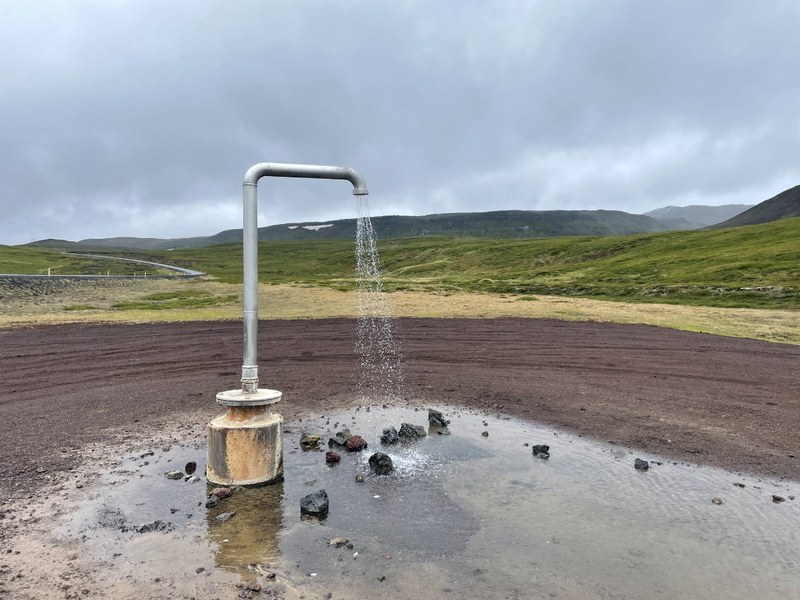
Jana Nováková, Well with Nature/EEA
Over the past two decades, total freshwater abstraction in the EU has decreased, largely owing to reduced use of freshwater for cooling in electricity generation (EEA, 2025b). However, abstraction from groundwater has increased by 8.2% owing to an increase in use for agriculture and drinking water (EEA, 2025a).
Nitrate concentrations in groundwater have stabilised overall across the EU, with 87% of monitoring points now meeting the Nitrates Directive standard. However, pollution remains significant in many places (EC, 2026b; WISE Freshwater, 2026a). Since 2013, over 10% of groundwater bodies in Europe have consistently shown pesticide concentrations above quality threshold values (EEA, 2025b).
These trends have implications not only for the availability of water, but also for economic stability, food and energy security as well as Europe’s strategic autonomy.
Safeguarding sufficient, good-quality groundwater involves recognising that pollution remediation is often technically complex, slow and costly. Additionally, it may not fully restore water to its original condition.
Safeguarding also involves keeping groundwater abstraction at a low enough level that it can replenish naturally and can also sustain dependent ecosystems (Rouillard et al., 2026).
Figure 1. Pressures to groundwater
European biodiversity also depends on groundwater resilience
Groundwater connects landscapes and regulates the exchange of water and nutrients across ecosystems. Member States indicated that around 70% of the groundwater area reported on was linked with surface water and terrestrial ecosystems under the Water Framework Directive (EEA, 2026c).
Groundwater with good quantitative and chemical status is essential for many ecosystems and the unique, often endemic, species they support. These ecosystems in turn provide important ecosystem services to society. For example, they can break down pollutants, recycle nutrients and purify water.
Deterioration in the quality or quantity of groundwater can degrade groundwater-dependent ecosystems. In turn, the degradation of these ecosystems may affect groundwater and reduce overall resilience.
Around half of the EU groundwater bodies reported under the Water Framework Directive are exposed to pressures of pollution, over-abstraction and reduced recharge caused by land degradation and climate change (Rouillard et al., 2026; EEA, 2025c).
Reporting by Member States under the Habitats Directive for 2019 shows that only 17% of freshwater and terrestrial habitats dependent on high groundwater levels had a favourable conservation status. This contrasts with the 73% of groundwater bodies achieving good status overall under the Water Framework Directive.
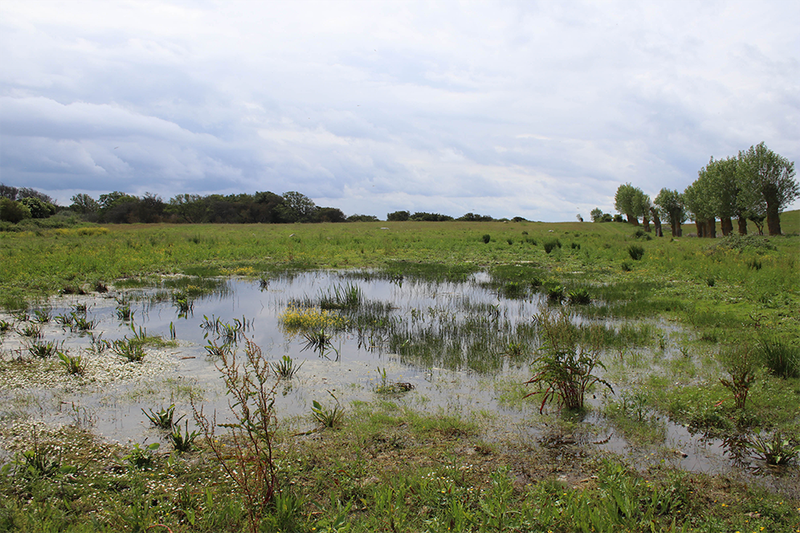
Caroline Whalley
Groundwater resilience in a changing climate
Climate change is increasing the frequency and intensity of droughts and floods. This is leading to growing challenges for water management in Europe (EEA, 2024a; Rossi et al., 2023). Groundwater plays a critical role in buffering these extremes, and its capacity depends on aquifers being recharged.
However, in parts of Europe — particularly in southern Europe — recharge is being affected by a range of factors that reduce infiltration. These include:
- general drying trends affecting terrestrial water storage (Chandanpurkar et al., 2025);
- more intense rainfall causing surface water runoff;
- soil degradation and land sealing, where land is covered by impermeable materials like concrete.
At the same time, rising temperatures increase evapotranspiration; this leads to greater demands from plants for water. Climate change and land use are therefore the two major factors influencing the capacity of landscapes to retain water and support groundwater recharge.
Evidence indicates that groundwater recharge has already declined in many regions and is projected to decrease by 20-50% across much of southern Europe by the end of the century (Kumar et al., 2025). Such decreases can increase the vulnerability of groundwater-dependent ecosystems and the availability of groundwater.
More limited or uncertain changes are expected in central European regions. Meanwhile, groundwater recharge will potentially increase in northern regions.
Restoring wetlands, floodplains, healthy soils and other measures to promote a ‘sponge landscape’ help the land to hold more water. It also enables water to soak into groundwater aquifers, which is an essential part of the water cycle.
Managed aquifer recharge — where water is deliberately put into aquifers for storage or environmental benefit — can also contribute to groundwater resilience where the conditions are suitable. This is provided that the risks to groundwater quality and ecosystems are appropriately assessed and that legislative requirements are met (EC, 2025b). However, this approach should complement rather than replace efforts to reduce demand and restore natural groundwater recharge.
Integrating groundwater resilience into cross-sectoral policy implementation
It is essential to ensure that groundwater quality and quantity are managed in an integrated way. This owes to the interconnections between groundwater, ecosystems and society’s use of water. This interconnectedness means that measures should be prioritised according to the severity of the pressures on groundwater and their potential impacts.
Pollution should be prevented at source and persistent contaminants phased out, in line with the objectives of the zero pollution action plan and broader zero pollution package (EEA and JRC, 2025). Abstraction controls should be implemented effectively and enforced, together with water allocation that takes into account possible future trends in resource availability. It is also necessary to embed the ‘efficiency-first’ principle of the EU water resilience strategy across sectors (EC, 2025a).
Effective implementation of measures needs to be supported by:
- stronger governance;
- improved monitoring (including earth observation);
- better data integration;
- sustained investment tailored to local hydrogeological conditions (Wolters et al., 2025).
Deploying the necessary measures depends on strengthening the implementation and enforcement of:
- the Water Framework Directive;
- the Nitrates Directive;
- the Nature Restoration Regulation;
- the Soil Health Monitoring Law.
It also relies on Copernicus services supporting Member States with EU-wide data.
Scaling up these approaches can be encouraged by embedding them into agricultural policies and urban planning, supported by integrated funding. For example, the EU Common Agricultural Policy (CAP), by only allowing payments to farmers when they meet certain conditions, aims to integrate the requirements of the Water Framework Directive and the Nitrates Directive on abstraction controls and the protection of waters against pollution, with a view to achieving more sustainable groundwater management (EU, 2021).
Towards a more integrated and systemic assessment of groundwater resilience
The current assessment of the chemical and quantitative status of groundwater bodies in Europe may underestimate the scale of pressures and impacts. The assessments are restricted due to inconsistent monitoring and limited integration of information on the impacts of groundwater conditions on dependent ecosystems (Rouillard et al., 2026).
Better integration of information on the contribution of groundwater to the health of ecosystems may provide a more realistic overview of the current conditions in Europe. It may also shed light on the actual capacity of groundwater in Europe to support European water resilience.
Groundwater quantity assessment and reporting need to be strengthened. Remote sensing data may help to reduce the reporting burden and also ensure harmonised assessment (Baatz et al., 2025). In summary, the following measures are necessary to better support robust decision-making across Europe:
- more harmonised quantitative status assessments;
- improved data on groundwater levels and recharge;
- stronger control of unauthorised abstraction;
- better integration of ecological information.
Monitoring for groundwater quality also needs to evolve. While nitrates and pesticides remain the dominant causes of poor chemical status, emerging contaminants need to be detected earlier and monitored more effectively.
Recently revised EU water legislation strengthens monitoring and assessment of groundwater pollution. It now includes some substances of emerging concern such as pharmaceuticals and PFAS. Additionally, it sets out updated groundwater quality standards (EU, 2026).
The European water resilience strategy recognises that digitalisation, monitoring and better governance are fundamental enablers of resilient water management. The information required for effective management can be provided by:
- expanding smart metering;
- strengthening groundwater observation networks — including monitoring sites and Earth observation such as Copernicus (EC, 2026b);
- improving water accounting (Rouillard et al., 2026).
Combined with more robust implementation of existing water legislation, these investments can help safeguard Europe's groundwater resources for future generations.
EEA Briefing 21/2026:
Title: Groundwater resilience — securing the future of Europe’s water resources
HTML: TH-01-26-047-EN-Q - ISBN: 978-92-9480-799-1 - ISSN: 2467-3196 - doi: 10.2800/7018852
The European Environment Agency (EEA) would like to thank its partners from the European Environment Information and Observation Network, EEA member countries and the European Topic Centre on Biodiversity and Ecosystems for their valuable contributions and input.
Baatz, R., et al., 2025, ‘Drought research priorities, trends, and geographic patterns’, Hydrology and Earth System Sciences 29(5), pp. 1379-1393 (DOI: 10.5194/hess-29-1379-2025).
Chandanpurkar, H. A., et al., 2025, ‘Unprecedented continental drying, shrinking freshwater availability, and increasing land contributions to sea level rise’, Science Advances 11(30), p. eadx0298 (DOI: 10.1126/sciadv.adx0298).
EC, 2025a, Communication from the Commission to the European Parliament, the Council, the European Economic and Social Committee and the Committee of the Regions: European Water Resilience Strategy (COM/2025/280 final), (https://eur-lex.europa.eu/legal-content/EN/TXT/?uri=CELEX%3A52025DC0280&qid=1750857768458) accessed 29 July 2026.
EC, 2025b, Managed aquifer recharge (MAR): Common Implementation Strategy for the Water Framework Directive and the Floods Directive, Guidance Document No 39, Directorate-General for Environment (https://data.europa.eu/doi/10.2779/9703167) accessed 25 September 2026.
EC, 2026a, ‘Copernicus Earth Observation and Monitoring Programme’ (https://eu-space.europa.eu/programmes/earth-observation-copernicus/copernicus) accessed 29 July 2026.
EC, 2026b, Nitrates Directive Evaluation — Executive summary of the evaluation, Directorate-General for Environment (https://environment.ec.europa.eu/publications/nitrates-directive-evaluation_en) accessed 25 September 2026.
EEA, 2021, Water resources across Europe — confronting water stress: an updated assessment., No 12/2021, Publications Office, LU (https://data.europa.eu/doi/10.2800/320975) accessed 5 November 2024.
EEA, 2022, Conservation status of habitat types and species: datasets from Article 17, Habitats Directive 92/43/EEC reporting, Database (https://www.eea.europa.eu/en/datahub/datahubitem-view/d8b47719-9213-485a-845b-db1bfe93598d) accessed 29 July 2026, EU Habitats Directive, EEA.
EEA, 2024a, European Climate Risk Assessment, No 01/2024 (https://www.eea.europa.eu/en/analysis/publications/european-climate-risk-assessment) accessed 16 September 2024.
EEA, 2024b, Europe’s state of water 2024: the need for improved water resilience, EEA Report No 07/2024, European Environment Agency (https://data.europa.eu/doi/10.2800/02236) accessed 29 July 2026.
EEA, 2025a, ‘Pesticides in rivers, lakes and groundwater in Europe’ (https://www.eea.europa.eu/en/analysis/indicators/pesticides-in-rivers-lakes-and) accessed 29 July 2026.
EEA, 2025b, ‘Water abstraction by source and economic sector in Europe’ (https://www.eea.europa.eu/en/analysis/indicators/water-abstraction-by-source-and) accessed 29 July 2026.
EEA, 2025c, ‘WISE Water Framework Directive expert dashboard’ (https://water.europa.eu/freshwater/resources/metadata/wfd-dashboards) accessed 29 July 2026.
EEA, 2026, WISE Water Framework Directive Database, Database DAT-124-en (https://www.eea.europa.eu/en/datahub/datahubitem-view/dc1b1cdf-5fa0-4535-8c89-10cc051e00db) accessed 29 July 2026, WFD, EEA.
EEA and JRC, 2025, Zero pollution monitoring and outlook 2025, EEA-JRC Report No 13/2024, European Environment Agency and Joint Research Centre (https://data.europa.eu/doi/10.2800/6470682) accessed 29 July 2026.
EU, 2021, Regulation (EU) 2021/2115 of the European Parliament and of the Council of 2 December 2021 establishing rules on support for strategic plans to be drawn up by Member States under the common agricultural policy (CAP strategic plans) and financed by the European Agricultural Guarantee Fund (EAGF) and by the European Agricultural Fund for Rural Development (EAFRD) and repealing Regulations (EU) No 1305/2013 and (EU) No 1307/2013 (OJ L 435, 6.12.2021, pp. 1-186).
EU, 2026, Directive (EU) 2026/805 of the European Parliament and of the Council of 30 March 2026 amending Directive 2000/60/EC establishing a framework for Community action in the field of water policy, Directive 2006/118/EC on the protection of groundwater against pollution and deterioration and Directive 2008/105/EC on environmental quality standards in the field of water policy (OJ L, 2026/805, 20.4.2026).
Kumar, R., et al., 2025, ‘Multi‐Model Assessment of Groundwater Recharge Across Europe Under Warming Climate’, Earth’s Future 13(1), p. e2024EF005020 (DOI: 10.1029/2024EF005020).
Rouillard et al., 2026, Groundwater in Europe: Securing a strategic resource under growing pressure, Technical report, European Topic Centre on Biodiversity and Ecosystems (https://www.eionet.europa.eu/etcs/etc-be/products/etc-be-products/etc-be-report-2026-6-groundwater-in-europe-securing-a-strategic-resource-under-growing-pressure) accessed 20 November 2026.
WISE Freshwater, 2026a, ‘Country Profiles on Nitrates Directive’ (https://water.europa.eu/freshwater/countries/country-profiles-on-nitrates) accessed 25 September 2026.
WISE Freshwater, 2026b, ‘Water Framework Directive’ (https://water.europa.eu/freshwater/europe-freshwater/water-framework-directive) accessed 29 July 2026.
Wolters, H., et al., 2025, Contributions of water saving to a climate resilient Europe (ETC BE Report 2025/1), Zenodo (https://zenodo.org/doi/10.5281/zenodo.15533040) accessed 12 October 2026.
- Water security refers to the protection and restoration of aquatic ecosystems as well as a fair balance between water supply and water demand in response to current needs. It includes the realisation of the human right to safe drinking water and sanitation without compromising the rights of future generations (EC, 2025a).↵
- Recharge refers to the process whereby surface water replenishes groundwater.↵
- This percentage reflects the 2019 conservation status reported under Article 17 of the Habitats Directive (Annex I). The 2026 assessment was still under development at the time of drafting this briefing.↵
- An aquifer is a body of rock and/or sediment that holds groundwater.↵
More must be done to strengthen Europe’s groundwater resilience
More work is needed to protect and strengthen the resilience of one of Europe’s most strategic natural assets, groundwater, which is facing increasing pressures like pollution, over-use and climate change, according to a European Environment Agency (EEA) briefing released today.