All official European Union website addresses are in the europa.eu domain.
See all EU institutions and bodies
An official website of the European Union | How do you know?
Environmental information systems
EN


EEA report 13/2026
This report explores how residential energy renovation measures can be tailored to support household decision-making and investment in a fair and inclusive way. Bottom-up and tailored policy mechanisms could support action to boost energy efficiency and reduce the energy consumption of vulnerable, lower income and middle-class households. This would cut monthly energy bills for millions of households while providing longer-term benefits to well-being.
EN PDF: TH-01-26-045-EN-N - ISBN: 978-92-9480-797-7 - ISSN: 1977-8449 - doi: 10.2800/2361704
Key messages
- Energy poverty remains a major challenge across the European Union (EU). Around 8.8% of the EU population were unable to adequately heat their homes in 2025. Climate change-driven heatwaves mean summer energy poverty is an urgent concern: 26% of EU households were unable to stay comfortably cool during the summer of 2023. Climate adaptation must be integrated systematically into energy renovation efforts.
- The EU has legally binding targets to be climate-neutral by 2050 and to cut greenhouse gas emissions by 55% by 2030 and 90% by 2040. To achieve these targets, buildings emissions must mainly be cut through energy renovation. This requires reversing the declining investment trend and closing the investment gap.
- Residential energy efficiency improvements can bring environmental benefits and yield immediate gains for households by cutting energy bills and improving local air quality. This could improve citizens′ health and welfare and slash healthcare costs. At scale, cutting household energy consumption can reduce Europe′s dependency on fossil fuel imports. Performance gaps between expected and observed energy saving need attention to ensure full, real-world delivery.
- Residential energy renovation support is often more easily available to wealthy households, while vulnerable and middle-income households face financial barriers, including high upfront costs, long payback periods and high electricity prices relative to gas. Renters face split incentives with landlords when investing in renovation, while public support mechanisms often show lower uptake by lower income groups due to a lack of awareness, low trust and administrative complexity.
- Policies tailored to the local circumstances and the socioeconomic situation of households are needed to speed up renovation, while ensuring affordability and social justice. Public subsidies can be adjusted based on income and additional social criteria, for example by targeting the most vulnerable and middle-income groups leaving in worst performing buildings, while ensuring a balance between simplicity and administrative costs. Market instruments combined with legal standards and social safeguards can address the split incentive on the private rental market. An understanding of behavioural dynamics can improve the effectiveness of policies aiming to incentivise investment inclusively.
- Proactive initiatives through one stop shops have delivered effective, tailored and local support to vulnerable households. Local municipalities understand socio-economic realities at neighbourhood level and are well-positioned to implement measures to promote residential renovation. Other community-based approaches, including energy communities, prosumerism and applying circular principles, offer further potential to engage households in a fair and affordable way.
- The ongoing development of the National Building Renovation Plans and the Social Climate Plans offer opportunities to implement consultative processes where vulnerable groups are given a voice and their concerns considered. At the policy design level, establishing data and information systems to precisely identify social groups and address the challenge of effective targeting is a priority.
Investing in climate-resilient, energy-efficient buildings will benefit lower income households the most
Europe’s housing stock and other buildings are far from being able to cope with climate extremes. However, energy efficient and climate resilient investments in new and existing building stock can benefit low-income households while at the same time contributing to the EU target of becoming carbon neutral by 2050. according to two European Environment Agency studies published today.
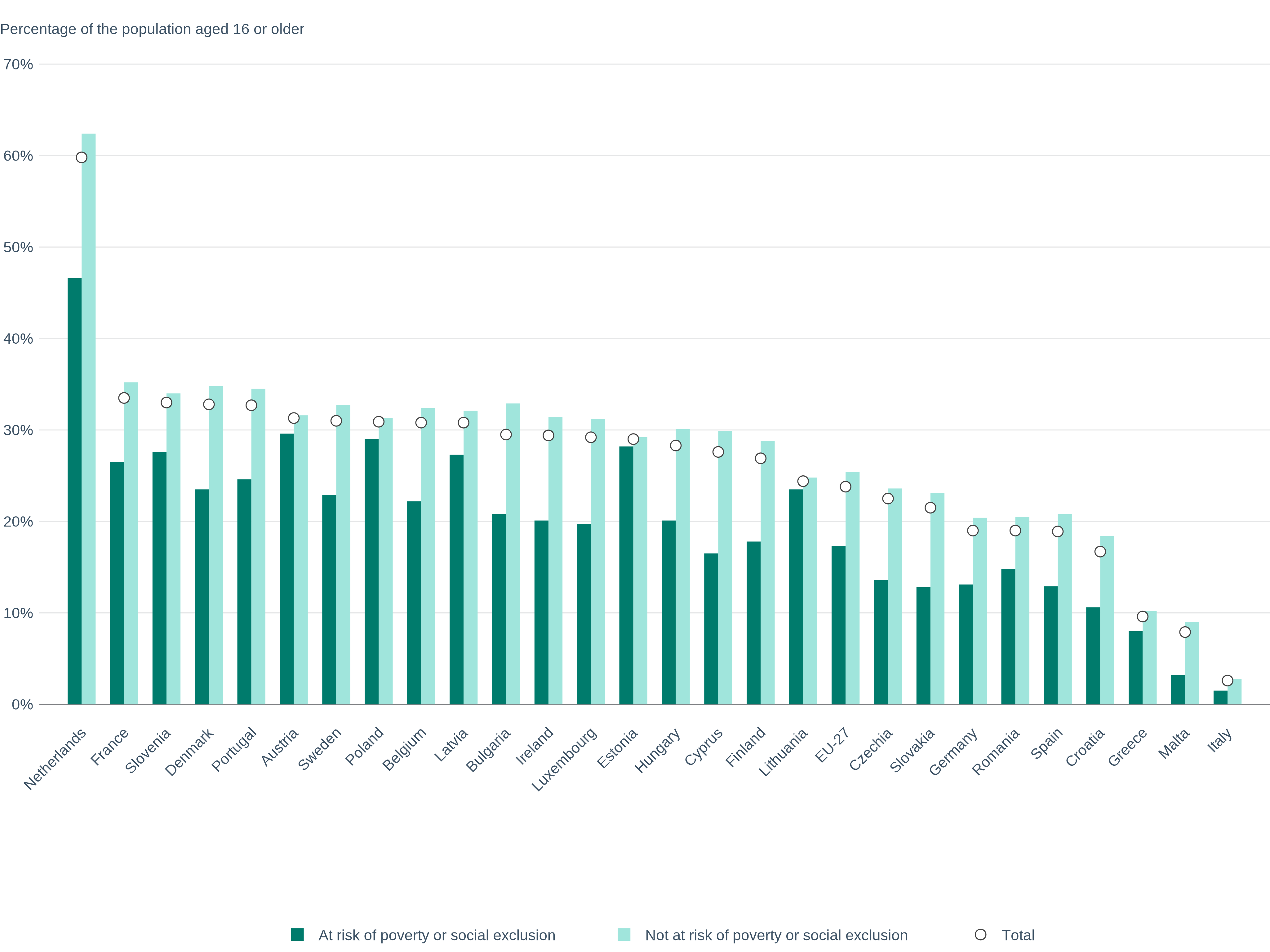
People living in dwellings in which energy efficiency improved in the last 5 years, 2025
The figure shows the % of people living in dwellings in which energy efficiency improved in the last 5 years, in 2025, split by risk of poverty or social exclusion
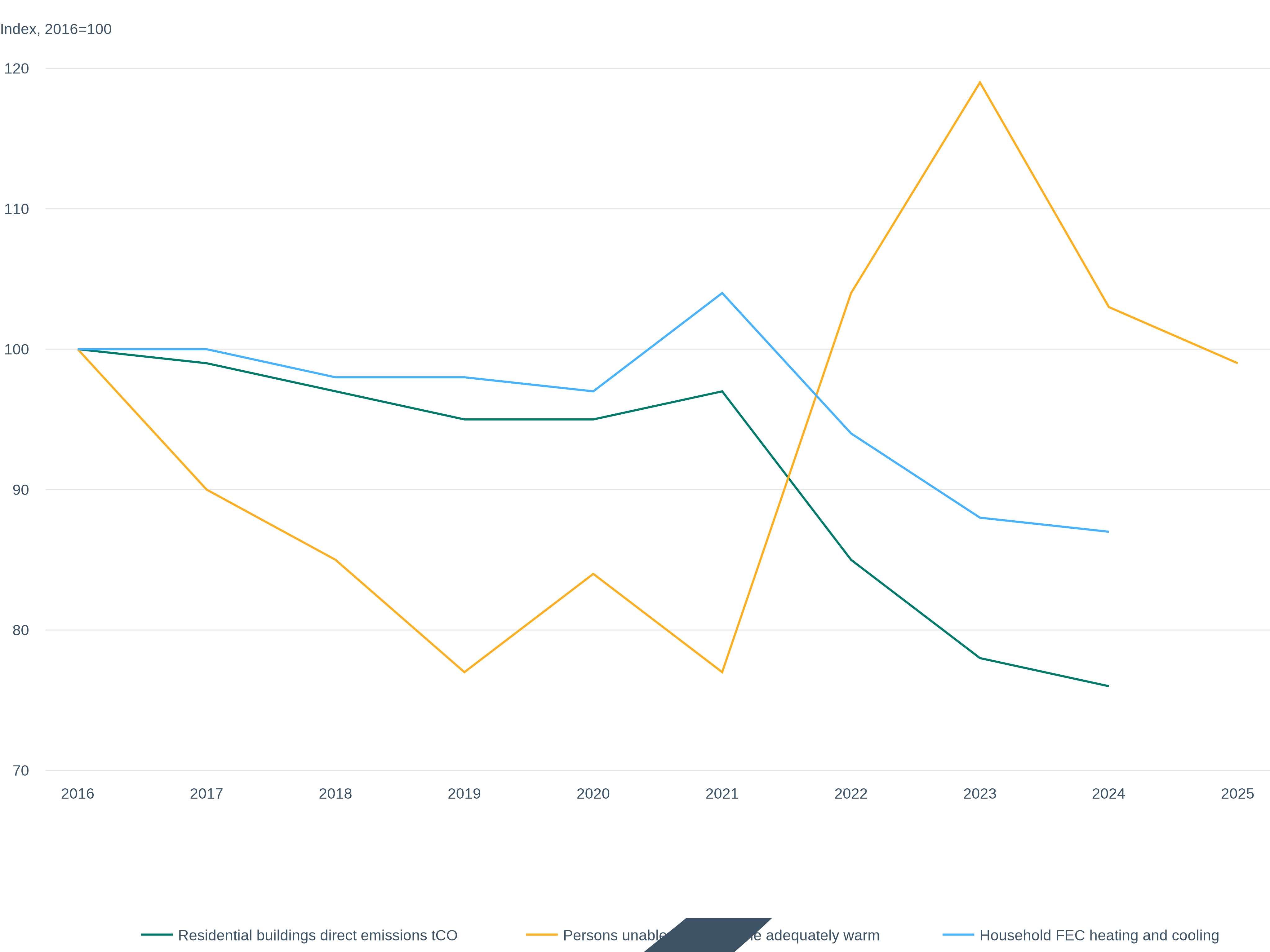
Trend in direct CO₂ emissions from residential buildings, households final energy consumption for heating and cooling, and inability to keep home adequately warm, EU-27, 2016=100
The figure shows trends in direct CO 2 emissions from residential buildings, households final energy consumption for heating and cooling, and inability to keep home adequately warm.
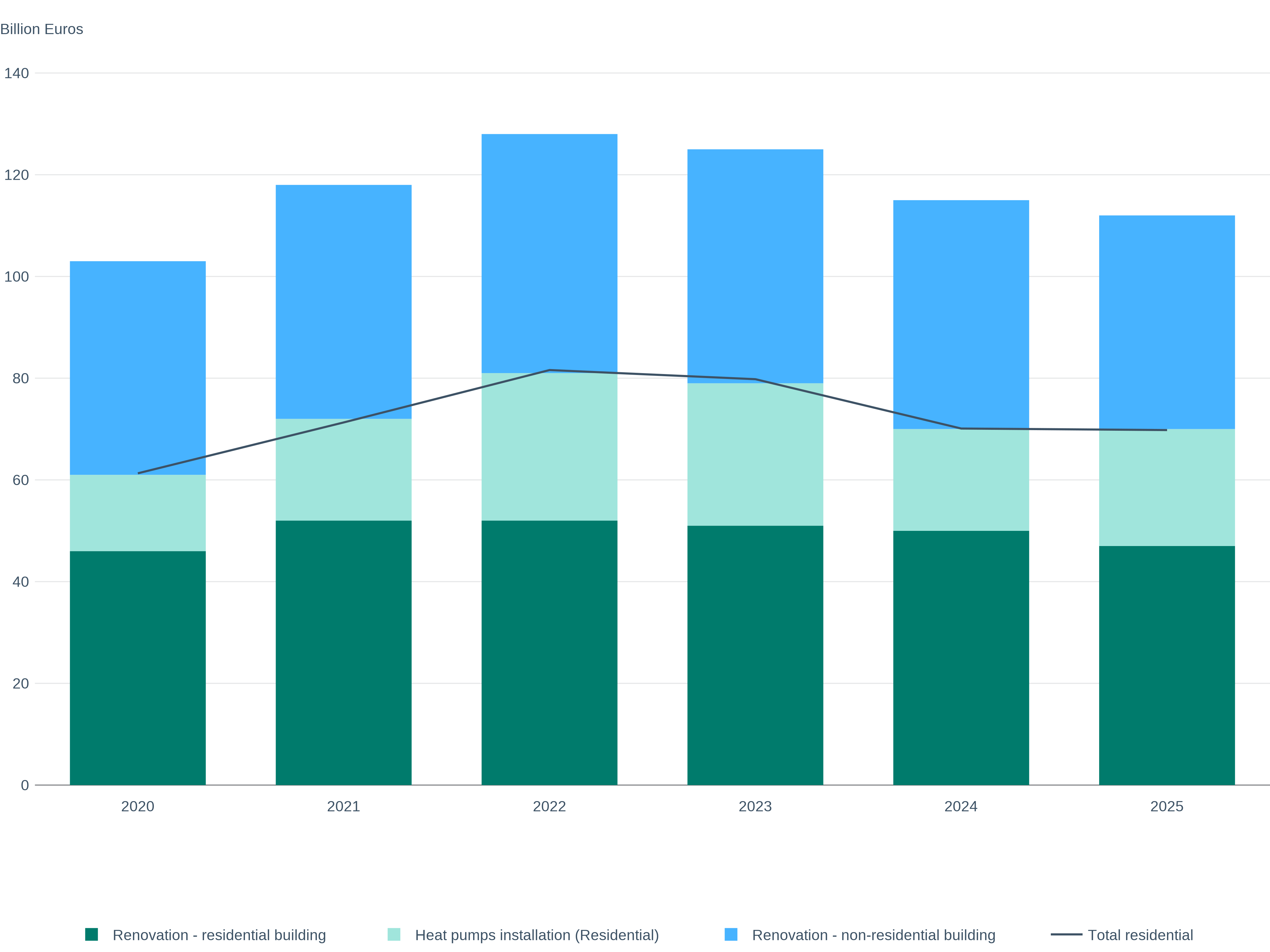
Trend in investment in the energy renovation of buildings and deployment of heat pumps in the EU, 2020-2025, Billion Euros
The figure represents climate investment in building energy renovation and the deployment of heat pumps in residential buildings between 2020 and 2025.
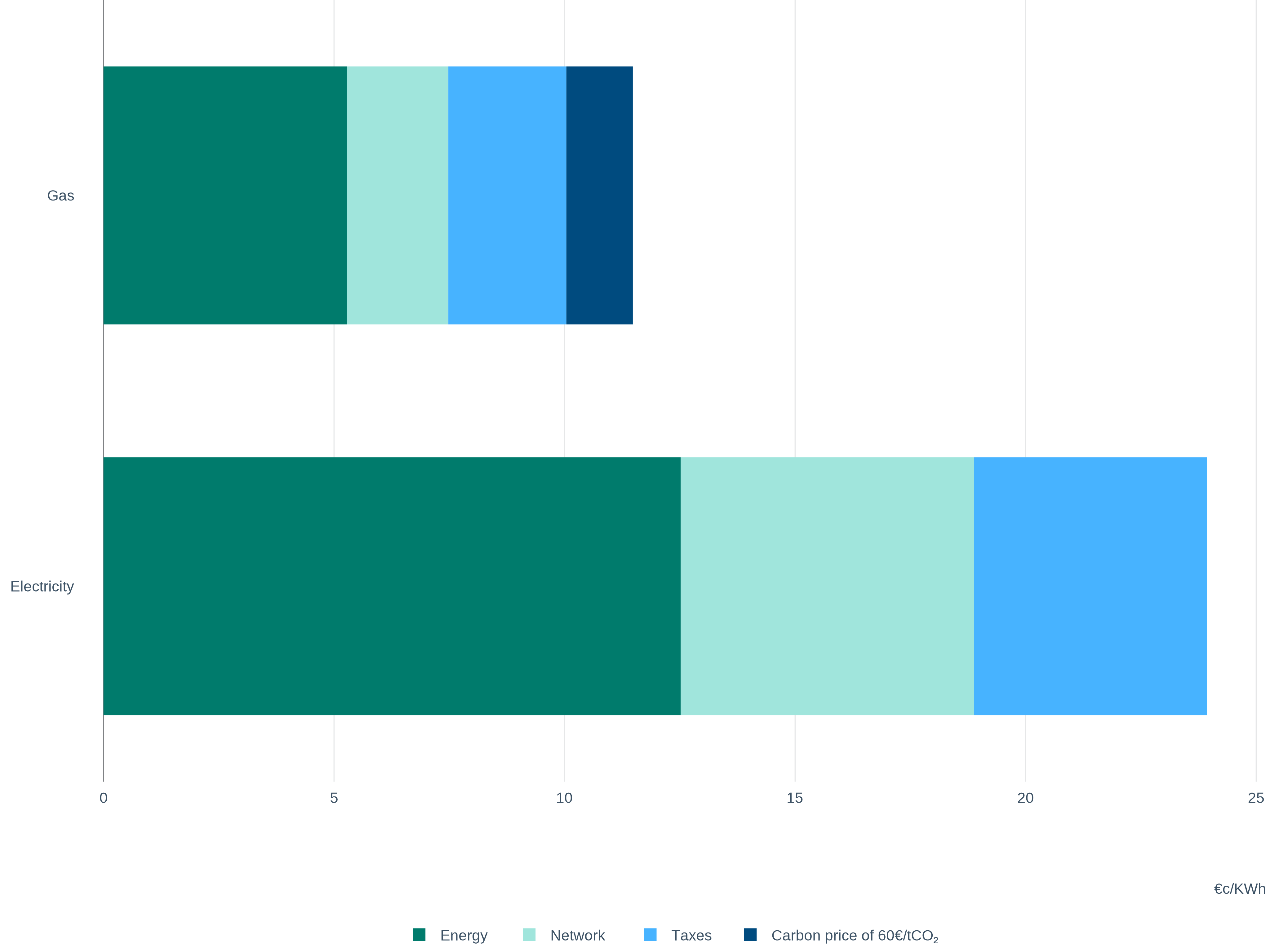
A comparison of household energy prices, eurocents/KWh, May 2024, EU average
The figure shows the components of prices for electricity and gas prices for households in the EU, eurocents/KWh, May 2024