All official European Union website addresses are in the europa.eu domain.
See all EU institutions and bodies
An official website of the European Union | How do you know?
Environmental information systems
EN


This briefing examines the public health relevance of antimicrobial resistance (AMR) in surface waters and urban wastewater. It draws on a report by , published in the context of the recast Urban Wastewater Treatment Directive and the revised Water Framework Directive.
Key messages
The environmental dimensions of AMR are increasingly recognised as important factors that may influence its emergence, dissemination and persistence.
Antibiotics, metals and other pollutants in surface waters can select for AMR, promoting the survival and spread of resistant bacteria, including those naturally resistant.
Global warming can promote the accumulation, persistence and spread of AMR and antibiotic resistance genes across human, animal, plant and environmental sectors.
The public health impacts of environmental AMR remain poorly understood and may depend on the type and conditions of exposure, gene-bacteria combinations and host susceptibility.
Reliable, standardised AMR monitoring, including of surface waters and urban wastewater, is needed to provide comparable data, identify hotspots, track resistance across One Health sectors and support risk-based prevention.
AMR is a cross-sectoral One Health challenge
AMR occurs when microorganisms acquire mechanisms that allow them to survive antimicrobial treatment. AMR leads to the emergence and spread of drug-resistant pathogens in humans, animals and plants (Larsson and Flach, 2022; Murray et al., 2024; Naghavi et al., 2024). As a result, infections become harder to treat and may lead to prolonged illness, greater healthcare costs and increased mortality.
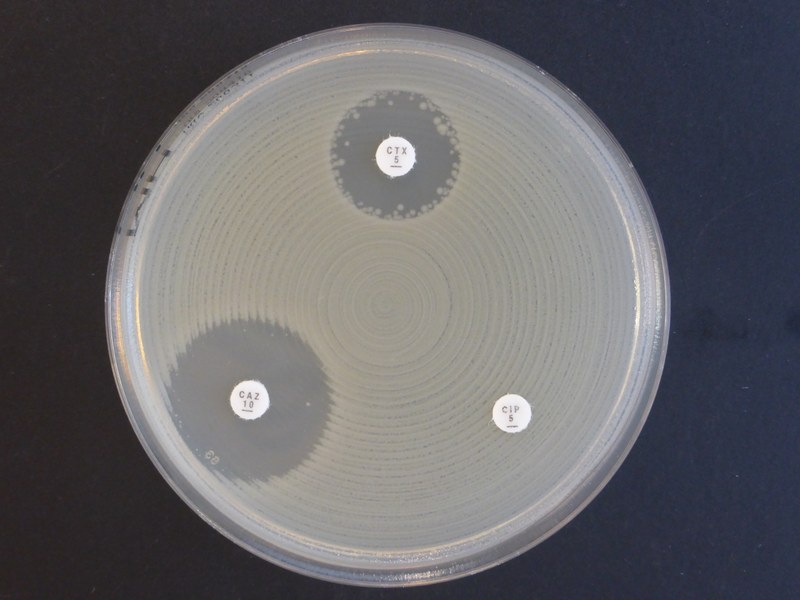
Note: Minimum inhibitory concentration assays for antimicrobial resistance
AMR is a major global public health threat, with a global health burden comparable to that of HIV and malaria. More than 35,000 people are estimated to die each year from antibiotic-resistant infections in the EU and the European Economic Area (ECDC, 2022). AMR is best addressed through a One Health approach, because humans, animals, plants and ecosystems all play a role in its emergence, spread and persistence. One Health is an integrated approach that aims to optimise the health of people, animals, plants and ecosystems by recognising and addressing the links between them (WHO, 2026).
How AMR enters and moves through the environment
Although antimicrobials, antimicrobial-resistant microorganisms — including antibiotic-resistant bacteria (ARB) — and antibiotic resistance genes (ARGs) occur naturally in the environment, human activities can increase their abundance (Krzeminski et al., 2026a).
Figure 1 shows how antimicrobials, other selective agents, ARB and ARGs can enter the environment from , industry, agriculture and other sources. Surface waters can then carry them to downstream ecosystems, where people and animals may be exposed.
Figure 1. Sources and pathways of antimicrobial resistance (AMR) in the aquatic environment
Please select a resource that has a preview image available.
Inappropriate use of antimicrobials in humans, animals and plants is one of the major drivers of AMR emergence and spread (Berendonk et al., 2015; Krzeminski et al., 2026a; Pruden et al., 2018). However, resistant microorganisms, resistance genes and antimicrobial residues do not remain confined to hospitals, households, industries or farms. They can enter wastewater, soils and surface waters, connecting the human, animal and environmental dimensions of AMR.
Rivers, lakes, transitional waters and coastal waters receive antimicrobial residues, other pollutants, ARB and ARGs from a broad range of anthropogenic sources, including urban wastewater treatment plant effluents, industrial discharges, stormwater-related sewer overflows, sewage sludge, agricultural runoff, livestock manure, aquaculture, wildlife and other diffuse sources (Figure 1). Aquatic environments link humans, animals and plants. They provide opportunities for the selection and exchange of resistance, while acting both as reservoirs in which AMR persists and accumulates and as pathways for its dissemination (Berglund et al., 2023).
Urban wastewater treatment can substantially reduce bacterial loads. However, conventional treatment is not usually designed to completely remove resistant bacteria, resistance genes or antimicrobial residues (Hiller et al., 2019; Rizzo et al., 2013; Uluseker et al., 2021). In addition, other substances that exert selective pressure, such as metals, pesticides and many pharmaceuticals, may contribute to the emergence and spread of resistance through co-selection mechanisms, whereby exposure to one stressor (e.g. metals) indirectly selects for resistance to another (e.g. antibiotics) (Gillieatt and Coleman, 2024; Murray et al., 2024). This links closely to the objectives of the EU zero pollution action plan, which aims to reduce these pollutants to levels that no longer harm people or the environment. Achieving this would also reduce the risk of these pollutants influencing AMR.
Potential public health implications
Aquatic environments may facilitate the persistence, selection and spread of AMR, which can ultimately affect human, animal and plant health, and worsen an already serious threat in Europe and globally. However, the relative importance of individual exposure and transmission pathways remains uncertain, and the role of aquatic environments in transmitting AMR to people, animals and plants is poorly understood (Amarasiri et al., 2020; Stanton et al., 2022).
The presence of ARB or ARGs alone does not indicate a direct health risk (Ashbolt et al., 2013; Martinez et al., 2015): there must also be a pathway through which exposure can occur.
The potential health implications of AMR depend on the combination of bacteria and resistance genes involved, the susceptibility of exposed hosts and the conditions of exposure. These uncertainties highlight the need to strengthen the evidence base, including through environmental monitoring. When combined with information on AMR, environmental conditions, human or animal exposure and its outcomes, monitoring data can support targeted assessment and management of AMR-related risks (Krzeminski et al., 2026a).
Improved approaches are also needed to translate environmental monitoring data into AMR risk assessments (Goh et al., 2022; Yuan et al., 2025). In addition, integrated One Health monitoring across human, animal and ecosystem health can support the development of control measures and of targeted strategies to prevent and combat AMR.
Climate change and AMR
Climate change affects the occurrence, dissemination and impacts of AMR. Higher water temperatures can favour the environmental survival or growth of bacteria and may affect microbial interactions and gene transfer (Baroja et al., 2026).
Low river flows and drought can reduce dilution and increase the concentration of wastewater-derived contaminants. Conversely, heavy rainfall and flooding can mobilise contaminated runoff and untreated urban wastewater from stormwater overflows, sediments and manure, creating periods of elevated contaminant levels in the receiving environment that may last for several days or, in extreme cases, even weeks. This can influence pollutant exposure, pathogen survival and growth (Gomes, 2024; Lin et al., 2025).
Monitoring of AMR in surface waters and urban wastewater
The environment is an integral part of One Health (WHO, 2026), but environmental AMR remains less systematically monitored than AMR in healthcare, animals, plants and food systems (JPI AMR, 2022; Niegowska et al., 2021). Monitoring AMR in water can provide valuable information on whether resistance persists in the environment or even spreads, for example to bacteria of relevance for human, plant or animal health (Anjum et al., 2021; Pärnänen et al., 2019).
Because the public health implications of AMR in the aquatic environment remain uncertain, monitoring is also needed to close important evidence gaps and support future risk assessment.

Julián Fernandez Quilez, Resilient by Nature/EEA
Harmonised monitoring of surface waters and wastewater could help to identify hotspots relevant to the accumulation and spread of resistance, reveal spatial and temporal trends, support the detection of emerging resistance and contribute to the evaluation of interventions and evidence-based management (EEA, 2025; Liguori et al., 2022).
A European pilot study carried out by the European Environment Information and Observation Network (Eionet) demonstrated that coordinated environmental AMR monitoring is feasible, while highlighting the need for common objectives, harmonised indicators, comparable analytical methods, clear terminology for AMR and ARGs, quality assurance and centralised reporting (Hock et al., 2026; Krzeminski et al., 2026b; Schwermer et al., 2025).
Efforts to support methodological harmonisation are currently underway. Harmonised monitoring of AMR in urban wastewater is a requirement under the recast Urban Wastewater Treatment Directive (EU, 2024) with, for example, the Joint Research Centre developing quantitative polymerase chain reaction (qPCR) assays, quality assurance and quality control procedures and preparing reference materials (Seigneuric et al., 2026). Under the revised Water Framework Directive (EU, 2026), the European Chemicals Agency is investigating suitable indicators of the presence, evolution and transmission of AMR that could be included in watch lists.
Action needed — strengthening environmental AMR monitoring
Europe already makes considerable efforts towards AMR surveillance in clinical, veterinary and food systems (ECDC et al., in prep). However, evidence on the environmental dimension of AMR remains a significant gap in the One Health approach. Environmental AMR monitoring includes urban wastewater, surface waters and groundwater and provides information on AMR occurrence, trends, spread and exposure pathways.
The actions identified in a new study by the European Topic Centre on Biodiversity and Ecosystems (ETC BE) and the European Topic Centre on Human Health and the Environment (ETC HE) (Krzeminski et al., 2026a) include:
establishment of a harmonised and integrated environmental AMR monitoring framework across Europe;
further research on harmonised AMR methods, indicators and standards across human, animals, food and environmental sectors that support the establishment of indicators within a scalable and adaptable monitoring framework;
identification of contamination sources, environmental hotspots and key transmission pathways;
comparison of AMR patterns across countries and detection of emerging resistance;
evaluation and communication of the effectiveness of actions to reduce environmental AMR, including urban wastewater treatment and agricultural measures;
assessment of the impact of floods, droughts and other climate-related events on AMR dissemination;
use of environmental AMR data to support and inform policy development at EU and national levels, including risk identification and suitable reduction measures in water;
reduction of environmental selective pressures and proactively addressing emerging risks;
identification of resources needed to support this new area of environmental monitoring.
Conclusion
The environmental dimensions of AMR, including surface waters, should be addressed as an integral part of the One Health approach. While important knowledge gaps remain, Europe is developing environmental AMR monitoring to inform actions to reduce environmental AMR and associated selective pressures.
A stepwise and harmonised approach would provide comparable information on AMR occurrence, sources, hotspots and transmission pathways, while linking environmental findings with human and animal health surveillance. Environmental monitoring can support more targeted, risk-based assessment and management of AMR.
Achieving this common goal in Europe requires the establishment of a purposeful, coordinated environmental AMR monitoring programme. Monitoring indicators that are comparable across One Health sectors would provide a basis for targeted prevention and risk management, help to identify where action is most needed, assess the effectiveness of interventions and improve preparedness for emerging environmental AMR risks. This would turn environmental surveillance from a remaining gap into a practical instrument for prevention and One Health action.
EEA Briefing 23/2026:
Title: Antimicrobial resistance in Europe’s surface waters — closing an important gap in the One Health response
HTML: TH-01-26-053-EN-Q - ISBN: 978-92-9480-805-9 - ISSN: 2467-3196 - doi: 10.2800/9722021
The European Environment Agency (EEA) would like to thank its partners from the European Environment Information and Observation Network (EEA member countries and European Topic Centres), the European Food Safety Authority, the European Medicines Agency, the European Centre for Disease Prevention and Control, the European Commission's Directorate-General for Environment,Directorate-General for Health and Food Safety and Joint Research Centre for their valuable contributions and input.
In particular, the EEA would like to acknowledge the contributions from the European Topic Centre on Biodiversity and Ecosystems (ETC BE) and the Norwegian Institute for Water Research (NIVA) as well as the European Topic Centre on Human Health and the Environment (ETC HE) and the German Federal Environment Agency (UBA) for this publication.
Amarasiri M., Sano D., Suzuki S., 2020. Understanding human health risks caused by antibiotic resistant bacteria (ARB) and antibiotic resistance genes (ARG) in water environments: Current knowledge and questions to be answered. Critical Reviews in Environmental Science and Technology 50(19), 2016-59. 10.1080/10643389.2019.1692611.
Anjum M.F., Schmitt H., Börjesson S., Berendonk T.U., Donner E., Stehling E.G., et al., 2021. The potential of using E. coli as an indicator for the surveillance of antimicrobial resistance (AMR) in the environment. Current opinion in microbiology 64, 152-8. 10.1016/j.mib.2021.09.011.
Ashbolt N.J., Amézquita A., Backhaus T., Borriello P., Brandt Kristian K., Collignon P., et al., 2013. Human Health Risk Assessment (HHRA) for Environmental Development and Transfer of Antibiotic Resistance. Environ Health Perspect 121(9), 993-1001. 10.1289/ehp.1206316.
Baroja, E., Batalla, I., Sanz, M. and Chiabai, A., 2026. An integrated framework for antimicrobial resistance: links with climate change and vulnerability. Front Public Health, 13, 1679189. 10.3389/fpubh.2025.1679189.
Berendonk T.U., Manaia C.M., Merlin C., Fatta-Kassinos D., Cytryn E., Walsh F., et al., 2015. Tackling antibiotic resistance: the environmental framework. Nat Rev Microbiol 13(5), 310-7. 10.1038/nrmicro3439.
Berglund F., Ebmeyer S., Kristiansson E., Larsson D.G.J., 2023. Evidence for wastewaters as environments where mobile antibiotic resistance genes emerge. Communications Biology 6(1), 321. 10.1038/s42003-023-04676-7.
ECDC, 2022. 35 000 annual deaths from antimicrobial resistance in the EU/EEA. https://www.ecdc.europa.eu/en/news-events/eaad-2022-launch.
ECDC, EEA, EFSA and EMA, in prep. Antimicrobial consumption and resistance in bacteria from humans and food-producing animals - JIACRA V – 2022−2024.
EEA, 2025. Antimicrobial resistance in surface waters — developing environmental monitoring for better risk management. European Environment Agency.
EU, 2024. Directive (EU) 2024/3019 of the European Parliament and of the Council of 27 November 2024 concerning urban wastewater treatment (recast). https://eur-lex.europa.eu/eli/dir/2024/3019/oj.
EU, 2026. Directive (EU) 2026/805 of the European Parliament and of the Council of 30 March 2026 amending Directive 2000/60/EC establishing a framework for Community action in the field of water policy, Directive 2006/118/EC on the protection of groundwater against pollution and deterioration and Directive 2008/105/EC on environmental quality standards in the field of water policy. https://eur-lex.europa.eu/eli/dir/2026/805/oj.
Gillieatt B.F., Coleman N.V., 2024. Unravelling the mechanisms of antibiotic and heavy metal resistance co-selection in environmental bacteria. FEMS Microbiology Reviews 48(4). 10.1093/femsre/fuae017.
Goh S.G., Jiang P., Ng C., Le T.-H., Haller L., Chen H., et al., 2022. A new modelling framework for assessing the relative burden of antimicrobial resistance in aquatic environments. Journal of Hazardous Materials 424, 127621. 10.1016/j.jhazmat.2021.127621.
Gomes M.P., 2024. The Convergence of Antibiotic Contamination, Resistance, and Climate Dynamics in Freshwater Ecosystems. Water 16(18), 2606.
Hiller C.X., Hübner U., Fajnorova S., Schwartz T., Drewes J.E., 2019. Antibiotic microbial resistance (AMR) removal efficiencies by conventional and advanced wastewater treatment processes: A review. Science of The Total Environment 685, 596-608. 10.1016/j.scitotenv.2019.05.315.
Hock L., Luiken R., Valério E., Vargha M., Vierheilig J., Börjesson S., et al., 2026. Integrating AMR surveillance into wastewater monitoring systems in 2025: a position on the implementation of Article 17 of the Urban Wastewater Treatment Directive (UWWTD). Eurosurveillance 31(3), 2500289. 10.2807/1560-7917.ES.2026.31.3.2500289.
JPI AMR, 2022. Environmental dimensions of Antimicrobial Resistance. https://www.jpiamr.eu/app/uploads/2022/11/Environmental-dimensions-on-AMR_consultation-report-2022.pdf.
Krzeminski P., Bethe A., Anglès d'Auriac M., Mentzel S., Gjeitnes M., Grung M., et al., 2026a. Antimicrobial resistance (AMR) in surface waters and urban wastewater and its potential public health implications. https://www.eionet.europa.eu/etcs/etc-be/products/etc-be-products/joint-etc-be-and-etc-he-report-2026-antimicrobial-resistance-amr-in-surface-waters-and-urban-wastewater-and-its-potential-public-health-implications
Krzeminski P., Schwermer C.U., Anglès d’Auriac M., Bürgmann H., Schmitt H., Vierheilig J., et al., 2026b. Making Waves: towards a harmonized approach for monitoring antimicrobial resistance in European surface waters. Water Research 307, 126476. 10.1016/j.watres.2026.126476.
Larsson D.G.J., Flach C.-F., 2022. Antibiotic resistance in the environment. Nat Rev Microbiol 20(5), 257-69. 10.1038/s41579-021-00649-x.
Liguori K., Keenum I., Davis B.C., Calarco J., Milligan E., Harwood V.J., et al., 2022. Antimicrobial Resistance Monitoring of Water Environments: A Framework for Standardized Methods and Quality Control. Environmental Science & Technology 56(13), 9149-60. 10.1021/acs.est.1c08918.
Lin D., Du S., Zhao Z., Zhang T., Wang L., Zhang Q., et al., 2025. Climate warming fuels the global antibiotic resistome by altering soil bacterial traits. Nature Ecology & Evolution 9(8), 1512-26. 10.1038/s41559-025-02740-5.
Martinez J.L., Coque T.M., Baquero F., 2015. What is a resistance gene? Ranking risk in resistomes. Nat Rev Microbiol 13(2), 116-23. 10.1038/nrmicro3399.
Murray L.M., Hayes A., Snape J., Kasprzyk-Hordern B., Gaze W.H., Murray A.K., 2024. Co-selection for antibiotic resistance by environmental contaminants. npj Antimicrobials and Resistance 2(1), 9. 10.1038/s44259-024-00026-7.
Naghavi M., Vollset S.E., Ikuta K.S., Swetschinski L.R., Gray A.P., Wool E.E., et al., 2024. Global burden of bacterial antimicrobial resistance 1990-2021: a systematic analysis with forecasts to 2050. The Lancet. 10.1016/S0140-6736(24)01867-1.
Niegowska M., Sanseverino I., Navarro A., Lettieri T., 2021. Knowledge gaps in the assessment of antimicrobial resistance in surface waters. FEMS Microbiology Ecology 97(11). 10.1093/femsec/fiab140.
Pärnänen K.M.M., Narciso-da-Rocha C., Kneis D., Berendonk T.U., Cacace D., Do T.T., et al., 2019. Antibiotic resistance in European wastewater treatment plants mirrors the pattern of clinical antibiotic resistance prevalence. Science Advances 5(3), eaau9124. 10.1126/sciadv.aau9124.
Pruden A., Alcalde R., Alvarez P., Ashbolt N., Bischel H., Cápiro N., et al., 2018. An Environmental Science and Engineering Framework for Combating Antimicrobial Resistance. Environmental Engineering Science 35. 10.1089/ees.2017.0520.
Rizzo L., Manaia C., Merlin C., Schwartz T., Dagot C., Ploy M.C., et al., 2013. Urban wastewater treatment plants as hotspots for antibiotic resistant bacteria and genes spread into the environment: A review. Science of The Total Environment 447, 345-60. 10.1016/j.scitotenv.2013.01.032.
Schwermer C.U., Krzeminski P., Anglès d'Auriac M., Gjeitnes M., Moe J., Bellanger X., et al., 2025. Pilot study on antimicrobial resistance monitoring in European surface waters - Final report of the Eionet Working Group. EEA: Zenodo. 10.5281/zenodo.15296568.
Seigneuric R., Petrillo M., Paracchini V., Bernasconi C., Buttinger G., Balkova D., et al., 2026. A qPCR assay panel to monitor antimicrobial resistance within a One Health framework. 10.5281/zenodo.20794498.
Stanton I.C., Bethel A., Leonard A.F.C., Gaze W.H., Garside R., 2022. Existing evidence on antibiotic resistance exposure and transmission to humans from the environment: a systematic map. Environmental Evidence 11(1), 8. 10.1186/s13750-022-00262-2.
Uluseker C., Kaster K.M., Thorsen K., Basiry D., Shobana S., Jain M., et al., 2021. A Review on Occurrence and Spread of Antibiotic Resistance in Wastewaters and in Wastewater Treatment Plants: Mechanisms and Perspectives. Front Microbiol 12, 717809. 10.3389/fmicb.2021.717809.
WHO, 2026. One Health. https://www.who.int/health-topics/one-health accessed 2 October 2026.
Yuan Y., Ju H., Tong X., Xu F., Zhang J., Gin K.Y.-H., 2025. A comprehensive framework of health risk assessment for antibiotic resistance in aquatic environments: Status, progress, and perspectives. Journal of Hazardous Materials 497, 139748. 10.1016/j.jhazmat.2025.139748.
- ↵ETC Human health and the environment (ETC HE) https://www.eionet.europa.eu/etcs/etc-he
- ↵ETC Biodiversity and Ecosystems (ETC BE) https://www.eionet.europa.eu/etcs/etc-be
- Μixture of wastewater from homes, industry and urban runoff↵
Changing climate, other environmental factors can play role in spread of antimicrobial resistance
Climate change and other environmental factors can promote the accumulation, persistence and spread of antimicrobial resistant (AMR) bacteria and antibiotic-resistant genes in surface waters and urban wastewater, according to a European Environment Agency (EEA) briefing published today.