All official European Union website addresses are in the europa.eu domain.
See all EU institutions and bodies
An official website of the European Union | How do you know?
Environmental information systems
EN


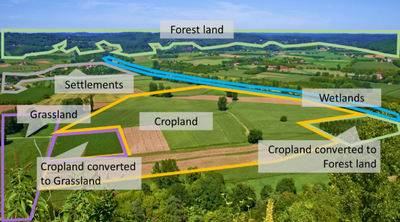
Management of land matters for how we address climate change. It is important for achieving the climate targets in the future. Why? We modify land characteristics for land for agriculture, forestry or settlements. This can either cause emissions or removals of greenhouse gases, depending on how land use changes and how intensively we manage land.
At the same time, the land sector itself is vulnerable to be impacted by climate change. Forests and other ecosystems suffer from increased frequency of storms, droughts and high temperatures. This increases their vulnerability for pest outbreaks and fires.
The land sector provides products that help reduce emissions in other sectors such as through the production of wood for construction and biomass for energy. GHG emissions and carbon removals from land use and land use change and forestry (LULUCF) are directly addressed by the EU climate framework. This sets targets and specific rules for reporting and accounting towards achieving climate neutrality.
Seven facts about the land sector
1 | It emits and removes CO₂
Land both stores and releases carbon. Growing biomass absorbs CO₂, while decay or burning releases it. That’s why inventories record emissions as positive and removals as negative.
2 | It is made of many distributed sources and sinks
Emissions and removals depend on various factors, human impacts, climate conditions, soil types, tree or plant species composition.
3 | Natural and human influences are intertwined
Natural processes (like forest regrowth) and human actions (like management) overlap, making it difficult to separate their effects. Reporting covers all land, while accounting focuses on managed land—which represents 97% of the EU land area.
4 | Natural events can cause sudden, large emission spikes
Natural disturbances such as wildfires, storms, droughts, and floods can generate major one‑off emission peaks. These must be reported even if they are not fully under human control and there are mechanisms to address this.
5 | Past decisions shape today’s emissions
Forest and land‑use practices create long-term “legacy effects.” Choices on species, harvesting cycles, and management can influence emissions and removals for decades.
6 | Carbon pools can reach saturation
Carbon stocks in forests and soils eventually stabilise when growth and decay balance out. Monitoring factors like forest age and resilience is key to understanding this trend.
7 | Higher natural and statistical uncertainties
Because emissions and removals depend on many natural variables, uncertainty is greater than in energy or industry. Advanced methods and better data help improve accuracy over time.
FAQs
1. What is the LULUCF Regulation about?
2. What is ‘land use’ and why is it important?
3. What is GHG reporting?
4. What is a land reporting category?
5. Which greenhouse gases have to be reported?
6. What are carbon pools?
7. What are the key components of GHG emissions and removals from the land sector in the EU?
8. What are the EU targets in the land use sector?
9. What is the difference between land use, LULUCF and agriculture?
10. Why is improving monitoring and reporting important for effective policies in the land sector?
11. How is biomass used for energy reported and accounted?
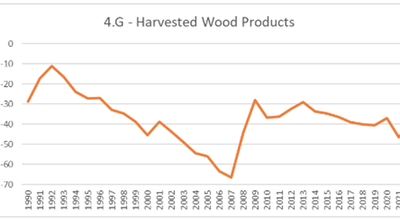
12. What are Harvested Wood Products and how are they related to other reporting categories?
13. How is Biochar application to soils included in the policy framework?
14. How is Bioenergy with carbon capture and storage (BECCS) included in the policy framework?
15. What is Blue carbon and is it included in the policy framework?
You might be interested in

Policy Info
The European Climate Law lays down the overall objective for Europe’s economy and society to become climate-neutral by 2050. By that time, EU-wide GHG emissions and removals regulated by EU law need to be balanced. Afterwards, the EU shall aim to achieve negative emissions.

Glossary
A glossary is a collection of terms and their meanings, helping readers understand specific concepts or technical language