All official European Union website addresses are in the europa.eu domain.
See all EU institutions and bodies
An official website of the European Union | How do you know?
Environmental information systems
EN


Key messages: Industrial releases of heavy metals (Cd, Hg and Pb), SOX and PM10 decreased over 75% in the EU between 2010 and 2024.Other emissions decreased to a lesser extent: NOX almost 60%, NMVOC by 41% and CO2 by 38%.
Industrial releases of pollutants to air and economic activity in the EU-27
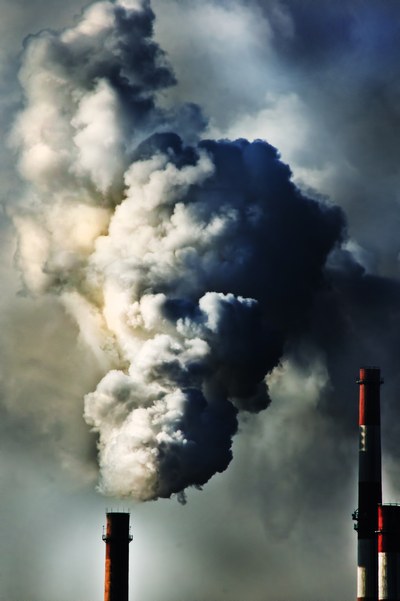
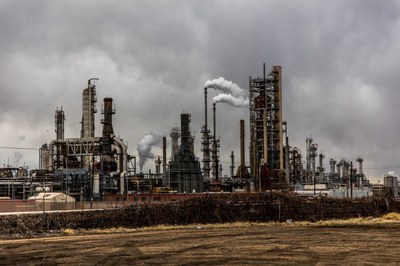
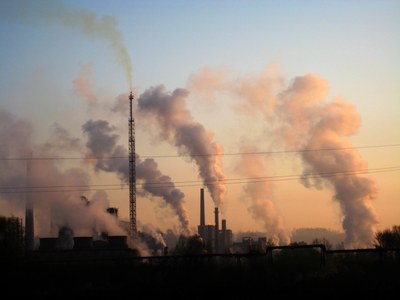
European industrial activity results in pollutants released to the air. These include greenhouse gases (GHG), such as CO2 and acidifying pollutants (e.g. sulphur oxides (SOX)), and other pollutants that damage human health and the environment, such as nitrogen oxides (NOX), particulate matter (in this case PM10), non-methane volatile organic compounds (NMVOCs), polycyclic aromatic hydrocarbons (PAHs) and heavy metals including cadmium (Cd), lead (Pb) and mercury (Hg).
Industrial emissions to air are reported under the Convention on Long-range Transboundary Air Pollution (CLRTAP Convention), the Governance of the Energy Union and Climate Action Regulation (for greenhouse gases) and the European Industrial Emission Portal Regulation, which covers releases from large industrial facilities involved in certain activities.
Between 2010 and 2024, industrial releases of heavy metals (Cd, Hg and Pb), SOx and PM10 decreased over 75 % in the European Union. Releases of other pollutants decreased less but still achieved significant reductions: NOx almost 60 %, NMVOC by 41 % and CO2 by 38 %.
During the same period, the value that industry generated for the economy — as measured by gross added value (GVA) — increased, indicating that European industry has become less emission intensive, as the ratio of air pollutant releases to the production of industrial goods decreased. The trend in GVA trend illustrates industry's full recovery from the COVID-19 crisis, followed by a more recent period of stagnation, highlighted by the increasing role of structural economic shifts in key sectors.
The decrease in industrial pollutant emissions to air can be partly attributed to European regulation, such as the EU Emissions Trading System and the Industrial Emissions Directive (recently revised in 2024).
These policies stimulated improvements in energy efficiency and uptake of abatement technologies, as well as progressive fossil-fuel phase-out. Since 2010, emission levels from the industrial sector decreased at a steady rate, achieving emission reduction over 50 % for pollutants like SOx, NOx and PM10.
Reductions in emission levels for heavy metals (Cd, Hg and Pb) are more variable, partly because better monitoring and reporting in certain countries can reveal previously underreported emissions, making it appear as if levels are rising.
Please consult the relevant indicators and signals below for a more comprehensive overview on the topic.
Zero Pollution Action Plan 2030 target or policy objectives
- Prevent, reduce and as far as possible eliminate pollution arising from industrial activities in compliance with the ‘polluter pays’ principle and the principle of pollution prevention ().
Return to the main pages:
Other relevant indicators and signals
References and footnotes
- EU, 2010, Directive 2010/75/EU of the European Parliament and of the Council of 24 November 2010 on industrial emissions (integrated pollution prevention and control), (OJ L 334, 17.12.2010, p. 17–119).↵