All official European Union website addresses are in the europa.eu domain.
See all EU institutions and bodies
An official website of the European Union | How do you know?
Environmental information systems
EN


In 2019, DG Environment estimates that between 1,6 and 61,1 kilo tonnes of microplastics were unintentionally released into the environment in the EU.
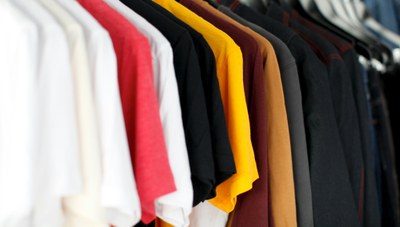
DG Environment estimates that between 1,6 and 61,1 kilo tonnes of microplastics were unintentionally released into the environment in the EU in 2019 (DG Environment, 2023). This makes textiles the fourth largest source of unintentional microplastic release into the European environment, following paints, tires, and pellets.
Although it is not possible to deduce a trend based on the data available, the amounts of microplastics released from synthetic clothing are expected to remain a substantial source of the overall microplastic pollution. While there are some signs of a downward trend in the use of synthetic fibres by EU industry, synthetic fibres remain common in the production of clothing, household textiles, and technical textiles (EEA, 2026). Furthermore, as microplastic emissions seem higher when clothes are washed for the first time, overall consumption levels are a main driver (ETC/HE, 2024). Unfortunately, factors determining the release of microplastics are still poorly understood and the long-term effects on ecosystems and human health remain unclear. Globally, it is estimated that microfiber releases from synthetic fibre production and apparel washing account for less than 1.5% of total plastic leakage from the apparel sector, which is instead dominated by mismanaged synthetic apparel at end-of-life. For synthetic apparel originally sold in EU countries, most of the plastic leakage is estimated to occur in countries receiving exports of used textiles (Kounina et al., 2024).
Furthermore, not all microfibres released from textiles are plastic-based. A significant portion comes from natural sources. It's important to differentiate between man-made fibres of natural origin, such as viscose and lyocell, and natural fibres like cotton, wool, and silk. Man-made fibres are derived from natural materials like wood pulp but are chemically altered into cellulosic fibres for textile production. Although they originate from natural substances, these fibres are considered semi-synthetic, and their biodegradability remains uncertain (ETC/CE 2022). Like microplastic fibres, they have been found in natural ecosystems and indoor air, raising concerns about their environmental persistence. Moreover, textiles can also be a source of non-fibrous types of microplastics, originating from the various types of materials or accessories used in clothes and textile products, such as prints, coatings, buttons and glitter (ETC/CE 2022).
Continue browsing in the Circularity Metric Lab by visiting one of these thematic modules: