All official European Union website addresses are in the europa.eu domain.
See all EU institutions and bodies
An official website of the European Union | How do you know?
Environmental information systems
EN


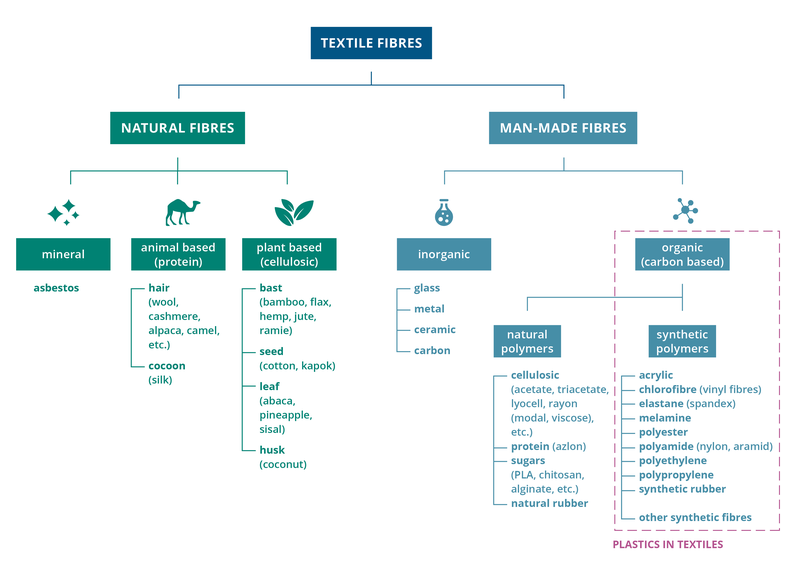
In 2024, 57% of fibres and yarns used by EU industry were of synthetic origin.
In 2024, the EU produced 3.7 million tonnes of fibres and yarns. Imports amounted to almost 2.0 million tonnes, while exports reached 0.7 million tonnes. This results in an apparent use by industry of approximately 5.1 million tonnes. Compared to 2010, this represents a decrease of around 3%, although use volumes fluctuated significantly over 2010-2024. 57% of fibres and yarns used by EU industry in 2024 were of synthetic origin, corresponding to approximately 2.6 million tonnes.
A closer examination of the trends reveals a shift in the composition of fibres and yarns used by EU industry. Around 2016, the use of synthetic fibres and yarns peaked and has since shown a gradual decline, with a more pronounced drop during the COVID-19 period. After this temporary disruption, the use of synthetic fibres resumed its downward trend. In contrast, the use of non-synthetic fibres and yarns has increased steadily since 2016. This growth is largely driven by increased use of artificial fibres and plant-based fibres other than cotton.
Fibres and yarns are primarily intermediate products used in textile manufacturing. The resulting outputs include both intermediate and finished textile products intended for domestic use within the EU as well as for export.
Overall, the share of synthetic fibres and yarns used in the EU remains substantial, although lower than the global average of 69% reported by Textile Exchange (2025). The observed decline in synthetic fibre use in the EU may indicate a gradual shift in industrial material use. However, this trend should be interpreted with caution, as it may also reflect changes in production structure, trade patterns, or data coverage.
Recent EU policy initiatives, including the Ecodesign for Sustainable Products Regulation (ESPR, 2024) and the introduction of mandatory Extended Producer Responsibility (EPR) schemes for textiles (from 2025) aim to improve the sustainability and circularity of textile products. These policies may contribute to future changes in fibre use, including reduced reliance on difficult to recycle blends of fibres and cheap short-lived synthetic fibres.
Continue browsing in the Circularity Metric Lab by visiting one of these thematic modules: