All official European Union website addresses are in the europa.eu domain.
See all EU institutions and bodies
An official website of the European Union | How do you know?
Environmental information systems
EN


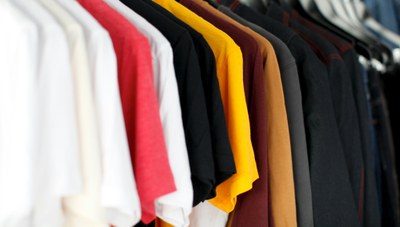
The yearly volume of used textiles exported from the EU has nearly doubled since 2005, with continued high amounts of exports of around 1.4 million tonnes annually since 2015, and most exports going to Africa and Asia.
Between 2005 and 2025, the export of used textiles from EU countries more than doubled to over 1.44 million tonnes in 2025 or 3.2 kg per person, and previous EEA publications have shown that it nearly tripled since . The volume has been relatively stable since 2015, with Africa and Asia as the main receiving continents. In 2020, there was a drop in exports due to the Covid-19 pandemic.
The exports mainly include worn clothes and other worn textile articles and only a minor amount of rags and textile scraps. There is currently very limited information on the quality of used textiles due to the absence of specific reporting requirements for textiles that are not considered waste. Between 2005 and 2025, Africa and Asia were the main destinations for exported used textiles, with Pakistan and the United Arab Emirates as the countries that imported by far the most. Over this period, Asia steadily increased its share and, by 2025, accounted for 48% of exports compared with 43% to Africa. Available evidence suggests that exported textiles to Africa are mostly reused while textiles exported to Asia are mostly recycled or re-exported, but for both regions some end up in dumps or burned in open .
The introduction of mandatory separate collection of textile waste, aiming to boost textile circularity, can be a push towards an increase in export volumes. On the other hand, new EU rules aimed at tightening controls over textile waste exports are expected to prevent waste from being falsely labelled and exported as reusable and to limit waste exports. The combined effect is currently uncertain. A profound shift towards circular textile consumption in the EU, such as lower consumption, longer use, increased reuse and increased textile-to-textile recycling in the EU would likely decrease the volume of used textiles exported.
Continue browsing in the Circularity Metric Lab by visiting one of these thematic modules: