All official European Union website addresses are in the europa.eu domain.
See all EU institutions and bodies
An official website of the European Union | How do you know?
Environmental information systems
EN


Most European city dwellers are exposed to unsafe levels of air pollution. Improving air quality to match World Health Organization (WHO)-recommended levels could prevent more than half of premature deaths caused by exposure to fine particulate matter.
Air pollution emissions have declined in the last two decades, resulting in better air quality. Between 2005 and 2023, the number of deaths in the EU attributable to PM2.5 fell by 57%, reaching for 2023 the 55% reduction target outlined in the zero pollution action plan for 2030. Despite this improvement, air pollution remains the largest environmental health risk in Europe. Long-term exposure to fine particulate matter, ozone and nitrogen dioxide levels above the World Health Organization recommendations cause an estimated 206,000, 71,000 and 56,000 premature deaths, respectively, in 2023, in Europe.
Air pollution also causes morbidity. The above-mentioned pollutants are linked to asthma and other respiratory diseases, heart disease, stroke and diabetes. People live with diseases related to exposure to air pollution; this is a burden in terms of personal suffering as well as significant costs to the healthcare sector.
Society’s most vulnerable are more susceptible to air pollution impacts. Lower socio-economic groups tend to be exposed to higher levels of air pollution, while older people, children and those with pre-existing health conditions are more susceptible.
Besides health issues, air pollution can considerably impact Europe’s economy due to increased healthcare costs, reduced life expectancy, and lost working days across sectors. It also damages vegetation and ecosystems, water and soil quality, and local ecosystems.
Press releases and articles
Publications
Indicators
Maps and charts
Datahub
Country fact sheets
Info pages
Frequently asked questions
Premature deaths in the EU attributable to air pollution in 2023
182,000
from exposure to fine particulate matter
34,000
from exposure to nitrogen dioxide
63,000
from exposure to ozone
Source: EEA, 2025, Harm to human health from air pollution in Europe: burden of disease status, 2025
Europe’s air quality is improving, but health challenges remain
Air pollution across Europe continues to decline, yet 9 out of 10 Europeans are still exposed to air pollution at concentrations considered unsafe for human health.
This EEA report presents the latest 2024–2025 data for key air pollutants, comparing concentrations against current EU standards and WHO recommendations, showing where progress continues and where further action is still required.

Ieva Bruneniece, My City /EEA
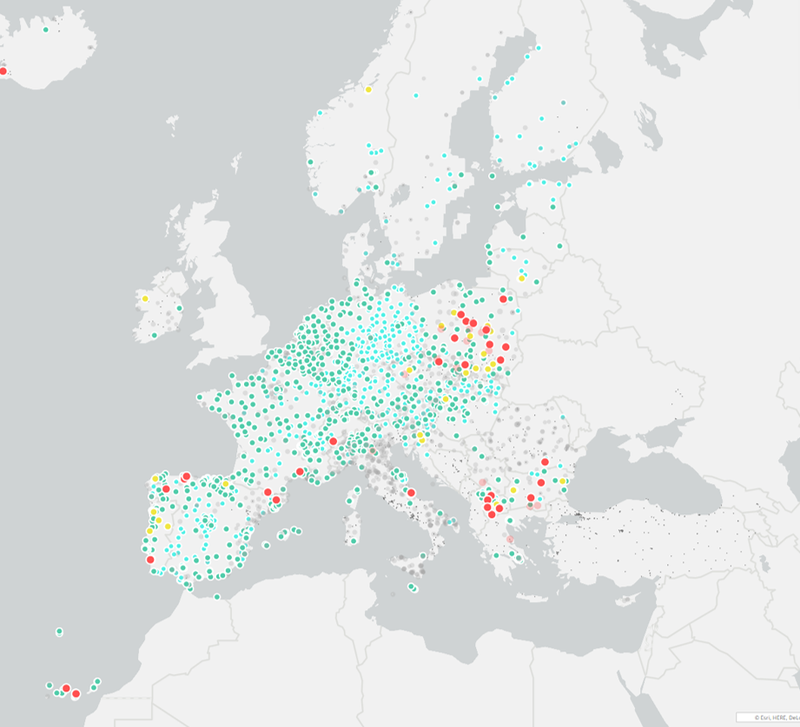
Check air quality at any time: European Air Quality Index & App
How clean is the air you’re breathing right now?
The European Air Quality Index provides information on the current air quality situation based on measurements from more than 3500 air quality monitoring stations across Europe and as a modelled layer for locations outside the stations coverage.
In the Index interactive citizens can check the air quality at station level or at any other point. The categorization of air quality is, based on five key pollutants that harm people's health and the environment: namely particulate matter (both PM2.5 and PM10), ground-level ozone, nitrogen dioxide and sulphur dioxide.
The index is also available as an app for mobile phones in all EU languages.

Watch a summary of the findings in a video on our YouTube channel, produced for the Clean Air Forum 2025.
Growing pollution from ports and airports requires stronger monitoring
The EU’s revised Ambient Air Quality Directive identifies ports and airports as potential air quality hotspots, highlighting that nearby communities face higher exposure to nitrogen dioxide and fine particulate matter.
Our new briefing, Air quality around ports and airports, shows that current monitoring around these transport hubs does not fully capture these impacts. Better monitoring is needed to assess potential health impacts and support the updated EU’s updated Ambient Air Quality Directive.
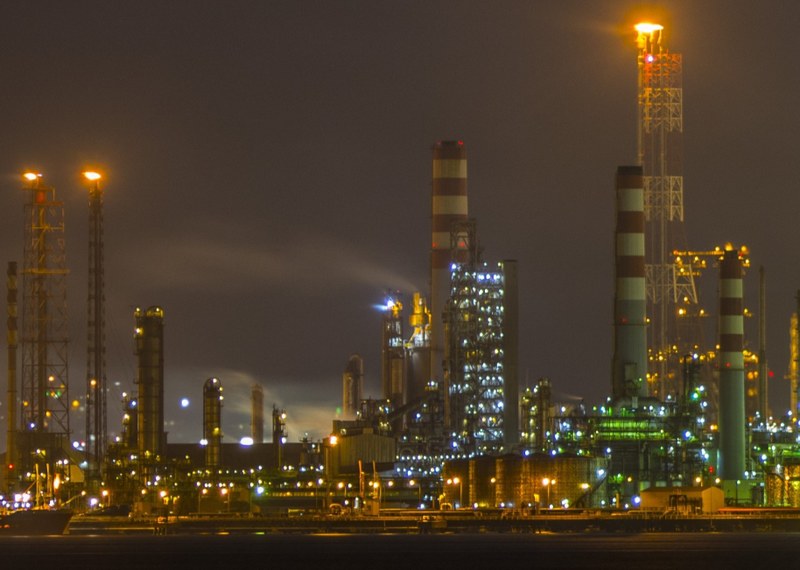
The costs to health and the environment from industrial air pollution
Air pollution from large European industry continues to cause significant damage to the environment, climate and people’s health.
The analysis shows that just a small fraction of the most polluting facilities — many of them coal power plants — causes half of the total damage.
However, the EEA analysis also shows that environmental and health costs of European industry have decreased by a third (-33%) from 2012 to 2021. The EU energy sector has accounted for the vast majority — about 80% — of the total decrease.
Orhan Kartal, ZeroWaste PIX / EEA