All official European Union website addresses are in the europa.eu domain.
See all EU institutions and bodies
Do something for our planet, print this page only if needed. Even a small action can make an enormous difference when millions of people do it!

Figure
 Rights:
Owners:
Processors:
Figure type:
Rights:
Owners:
Processors:
Figure type:
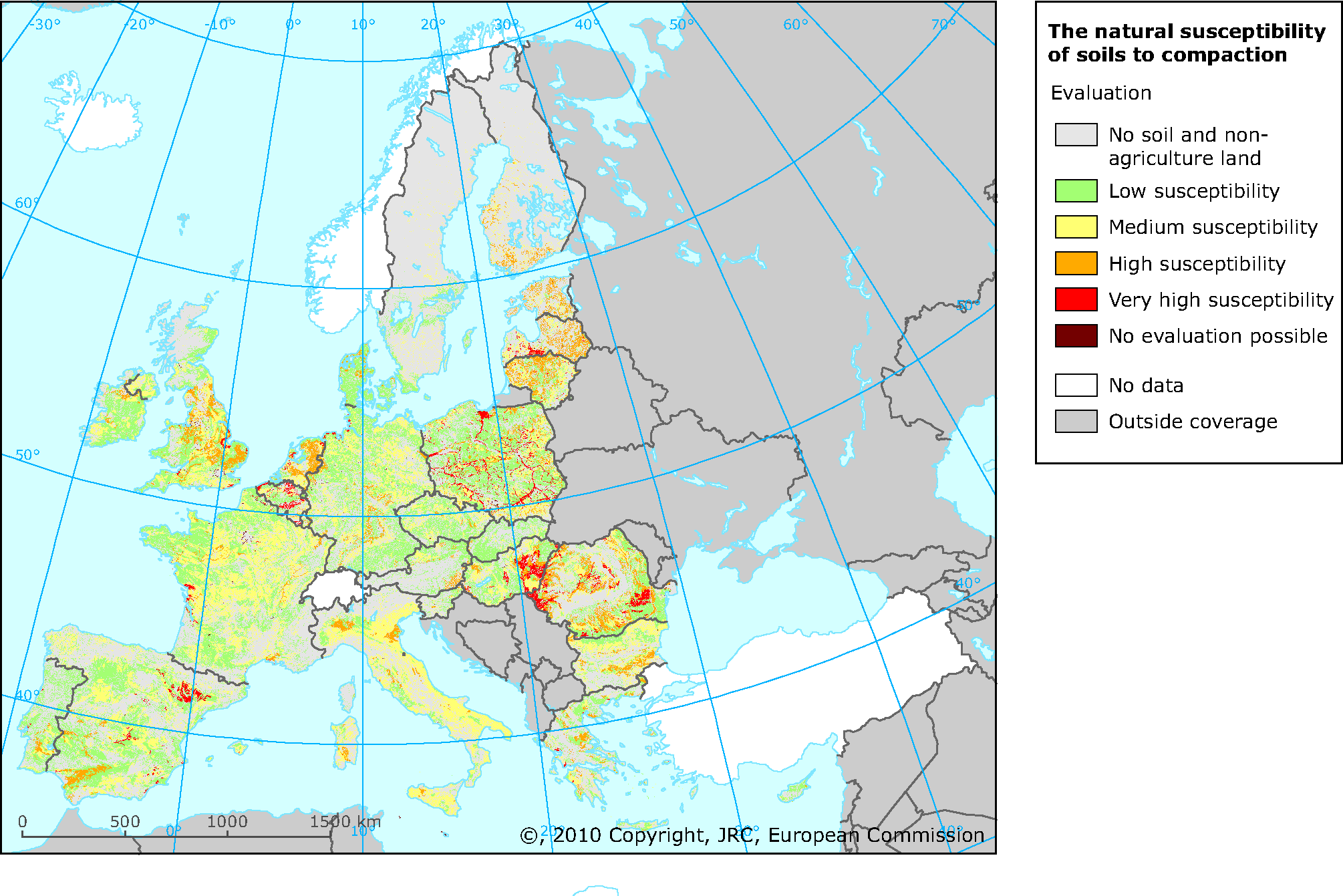
The map of natural soil susceptibility to compaction was created from the evaluation of selected parameters from the ESDB. The soil susceptibility to compaction was divided into 4 categories. Two additional categories represent the data concerning places where this evaluation was either not relevant or could not been provided because of lack of information. In total there are 6 categories:
0 - no soil. This represents water bodies, glaciers and rock outcrops
1 - low susceptibility to compaction
2. - medium susceptibility to compaction
3. - high susceptibility to compaction
4. - very high susceptibility to compaction
9. - no evaluation possible. This was the case of towns including also soils, soils disturbed by man and marsh.
For references, please go to https://www.eea.europa.eu/data-and-maps/figures/the-natural-susceptibility-fo-soils or scan the QR code.
PDF generated on 26 Apr 2024, 11:04 PM
Engineered by: EEA Web Team
Software updated on 26 September 2023 08:13 from version 23.8.18
Software version: EEA Plone KGS 23.9.14

Document Actions
Share with others