All official European Union website addresses are in the europa.eu domain.
See all EU institutions and bodies
An official website of the European Union | How do you know?
Environmental information systems
EN


Are you looking for insights on our work or getting to know the experts behind our analyses and data? Take a look at our latest articles, interviews with our experts and editorials by our Executive Director, including those published in our quarterly newsletter.
Interview — Who builds, installs and maintains Europe's clean-energy future?
22 Sept 2026
Europe is investing heavily in clean energy technologies and this is reflected in the job market, shows the report 'Clean energy technologies in the European Union — Implications for quality jobs, skills and a just transition', recently published by the European Environment Agency. We talked with Martina Bisello, expert on sustainability transitions and justice, about the report and its findings.
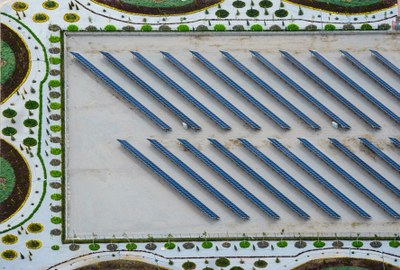
Editorial — Trust and facts in the age of disinformation
22 Sept 2026
Every day we are all confronted with an unprecedented volume of information every day. News, opinions, images, videos and increasingly AI-generated content compete for attention across digital platforms. New technologies and platforms offer extraordinary opportunities for participation, learning and engagement, but they also create risks. Misinformation and disinformation (i.e. when it is intentional) can distort public debate, undermine trust and weaken the foundations of democratic decision-making.
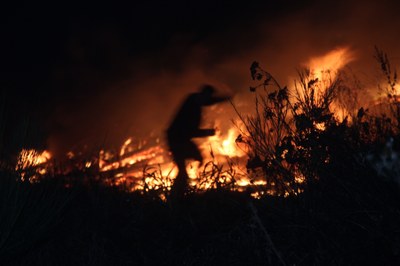
Editorial — Stronger together: Welcome Ukraine
18 Jun 2026
Today, I had the pleasure to welcome Ukraine into the European Environment Information and Observation Network (Eionet) as a cooperating country. With Ukraine, the EEA and Eionet now bring together expertise and experts from 40 European countries.

Interview — Nature is our best air conditioning
18 Jun 2026
Heatwaves are becoming more frequent and more intense across Europe, with serious consequences for human health — and for schools in particular. We discussed with Aleksandra Kazmierczak, EEA expert in Climate Change and Human Health, what the latest data shows and what cities and governments can do to protect people.
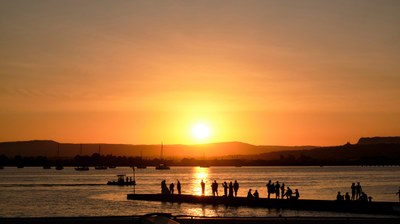
Editorial — Welcoming Moldova to the EEA and Eionet
19 Mar 2026
Today, I had the honour to officially welcome the Republic of Moldova as a cooperating country of the European Environment Agency (EEA) and the European Environment Information and Observation Network (Eionet). This milestone marks our shared commitment to tackling our common challenges to achieve our shared objectives to safeguard our natural environment in Europe.
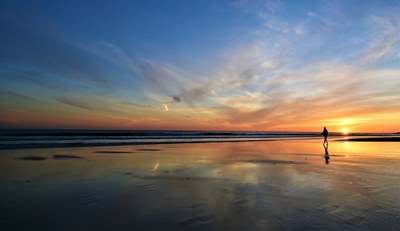
Interview — Pollution, our mental health and vulnerable groups: what is the connection?
19 Mar 2026
What impacts are air, noise, chemical pollution having on our mental health? And, related to this, what impacts are pollution levels having on children, elderly and less well-off living in our cities? The EEA has recently published a briefing on pollution and mental health and is working on another one looking at vulnerable populations in European cities. We sat down with Gerardo Sanchez, environment, health and well-being expert and Jeanne Vuaille, environment and health data analysis expert to discuss this topic for an EEA podcast.
Interview — "Our job is to help shape the environment of tomorrow"
15 Dec 2025
At the end of this very busy year for the European Environment Agency (EEA), we sat down with André Weidenhaupt, EEA Management Board Chair and Director-General at Luxembourg’s Ministry of the Environment, Climate and Sustainable Development , to discuss the European Environment Agency’s role in shaping the future of Europe’s environment and climate.
Editorial — Innovating and working together for a more sustainable future in Europe
15 Dec 2025
The year 2025 has been marked by significant collective achievement around our five-yearly report, renewed strategic direction and a deepened sense of shared purpose across the EEA-Eionet community. The past months have showcased not only the strength of our network but also the increasing importance of innovation, agility and digitalisation in how we generate, create and deliver environmental knowledge for Europe.

Interview — Satellites and co-creation: 35 years of mapping Europe together
04 Dec 2025
As the European Environment Agency (EEA) marks 35 years of CORINE Land Cover (CLC), we spoke with Andrus Meiner, head of the Earth Observation Unit at the EEA and one of the longest-serving contributors to the dataset, about how it began, how it has evolved, and why it continues to matter today.

Editorial — Europe’s environment 2025: Providing knowledge for action
15 Sept 2025
We are getting ready to publish our five-yearly flagship report ‘Europe’s environment 2025’. It is the most comprehensive assessment of the state and outlook of Europe’s environment, climate and sustainability, providing trusted knowledge and data, co-created with our Eionet partners. At the European Environment Agency, our strength lies in our knowledge and our country network. Together, we provide evidence-based insights to inform the decisions that will shape Europe’s future.
Interview — Co-created by 38 countries: the story behind Europe’s environment 2025
15 Sept 2025
The European Environment Agency’s most comprehensive assessment of Europe’s environment, climate and sustainability has been co-created with 38 countries. More than 1,000 experts from over 600 institutions contributed to the upcoming Europe’s environment 2025 report, to be published at the end of September. We asked project coordinator Tobias Lung how he brought it all together and what makes this edition different.
Editorial — Water for people, nature and the economy
17 Jun 2025
Water sustains every aspect of our lives — from the health of our citizens to the productivity of our industries and the health of our natural environment. From extended droughts and pollution to mounting demand and inefficient use, our freshwater systems are under unprecedented stress. How can we ensure that we continue to have access to sufficient amounts of clean water in the future?
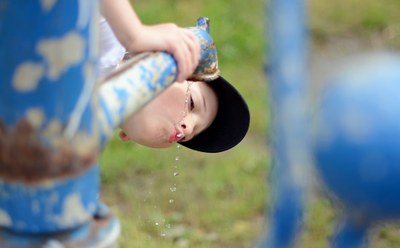
Interview — Assessing the health and environmental impacts of noise
16 Jun 2025
Noise — we all know that persistent levels of it can be annoying. But how harmful is it to our health and the environment? T he EEA will soon publish a comprehensive assessment of the impact noise pollution from transport is having on our health and on our environment. We asked Eulalia Peris, environmental noise expert at the EEA, to give a sneak preview of the report as well as key facts about noise pollution.

Editorial — Europe's sustainability compass in times of uncertainty
19 Mar 2025
The past few years have tested us in ways not many of us could have predicted. The pandemic and its health and economic impacts were followed by war on the European continent. Now, hardly a week passes without another major shock, such as shifts in global alliances or possible trade wars, fuelling further instability and uncertainty in political systems and economies worldwide.

Interview — The data behind our knowledge: what and how
19 Mar 2025
Karl Hamilton heads our Agency’s Digital department and his team’s work is crucial to the EEA’s knowledge work which relies on the use of high-quality data. The EEA handles over 140 data flows and 200 data sets, all requiring coordinated collection, processing and analysis. We asked him how the Agency works with this data and what exactly it is used for.

Interview — International cooperation to strengthen biodiversity
16 Dec 2024
Frank Wugt Larsen, EEA expert on biodiversity knowledge and networks, is part of the European Union delegation at the plenary of the Intergovernmental Science-Policy Platform on Biodiversity and Ecosystem Services (IPBES) in Windhoek, Namibia, 10-16 December 2024. We interviewed him to understand what IPBES does and how this work relates to other international efforts to improve the state of nature.

Editorial — Why Europe needs to stay the course to sustainability in a changing world
16 Dec 2024
The stakes could not be higher. Climate change is not a distant or theoretical threat — it is here. The past two years have been a stark reminder of this reality, with 2023 clocking in as the hottest year on record, only soon to be surpassed by 2024. From unprecedented flooding in Valencia and central Europe to droughts across southern Europe, the warning signs are clear: we must act now. Beyond the human suffering — which has no price — all of these events show that the cost of inaction far greater than the cost of taking action now.
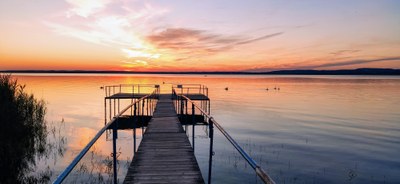
Editorial — Time to speed up towards a sustainable and resilient Europe
24 Sept 2024
Europe’s economy and wellbeing of its citizens depend crucially on a healthy and resilient natural environment, a stable climate and long-term sustainable use of resources. As Europe’s new policy cycle begins, Commission President-elect’s political guidelines and mission letters to future Commissioners reaffirm the course towards sustainability, while adding extra focus on competitiveness and security to boost Europe’s resilience to current and future crises.
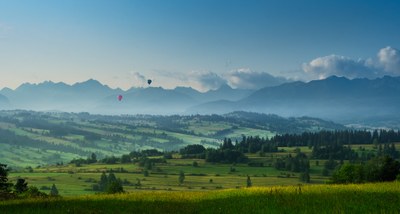
Interview — What satellites can tell us about Earth: Sentinels and Copernicus
24 Sept 2024
With the recent launch of Sentinel—2C, the European Union's Copernicus programme takes another leap in revolutionising Earth observation. Usue Donezar Hoyos, project lead at the Copernicus Land Monitoring Service (CLMS) at the EEA, who was invited to the satellite launch as representative of the Sentinel—2 users, discusses the importance of this mission, its role in ensuring data continuity and how it will shape environmental monitoring and policy across Europe.

Interview — Working on solutions to climate change: adaptation plays a key role
04 Jun 2024
The impacts of climate change and how our societies can cope and better prepare for the threats and risks posed to our health and wellbeing have been key areas of work for the EEA this year. We sat down with three experts, Ine Vandecasteele, Aleksandra Kazmierczak and Eline Vanuytrecht, who have looked specifically at how we can improve our adaptation and build resilience in cities as well as identifying emerging climate health risks posed by floods, droughts and water quality.

Deciding on Europe’s direction
04 Jun 2024
Citizens across Europe are about to elect the new European Parliament and set the course for EU policies over the next five years. We asked Leena Ylä-Mononen, Executive Director of the European Environment Agency’s (EEA) about the significance of these elections and environment and climate challenges ahead.

Interview — Assessing and addressing Europe’s climate risks
15 Mar 2024
The EEA has just published the European Climate Risk Assessment (EUCRA), a major report that should help Europe address increasing risks from climate change. We interviewed our colleagues Julie Berckmans, Marianne Dons Tychsen and Hans-Martin Füssel who have worked closely on the report for the past two years.

Editorial — From policy ambition to environment and climate action in Europe
15 Mar 2024
Environmental degradation and climate change are impacting us all — our health, economy and society. To address growing challenges and impacts, Europe has set ambitious policies and targets. A stocktake of progress shows that full implementation of environment and climate policies, additional measures when necessary, and mainstreaming into other policy domains are needed to help the EU progress towards meeting its targets. Adequate finance will be key to unlocking faster progress.

Interview — What is the role of biomass in Europe’s sustainability ambitions?
15 Dec 2023
The European Union and its Member States are increasingly putting focus on biomass and how it can support the transition towards a sustainable, climate-neutral economy. We interviewed Katarzyna Kowalczewska, EEA expert on agriculture and LULUCF integration, about EEA’s recent publication “The European Biomass Puzzle” and why the topic requires careful consideration from policymakers.

Editorial — Cleaner air, a stable climate and healthier lives
15 Dec 2023
The European Union has made substantial progress in improving air quality by adopting and implementing policies and measures since the 1980s. Yet, air pollution continues to pose the greatest environmental risk to people’s health in Europe. This risk is even higher when combined with climate change impacts, such as extreme heat, affecting vulnerable groups, like the elderly and children the most.
